




Education

Porcelain tile is the best overall choice for bathroom floors in 2026. It is dense, water-resistant, durable, and available in hundreds of finishes and sizes. For tighter budgets, ceramic tile is a reliable alternative. Natural stone tile offers unmatched beauty but requires more maintenance.
Quick Answer
For most bathroom floors, a matte or textured porcelain tile is the best choice. It absorbs very little water, resists staining, and provides good traction when wet. Ceramic works well in guest bathrooms or low-traffic areas. Natural stone suits high-end projects where regular sealing and maintenance are not a concern.
What Makes a Good Bathroom Floor Tile?
Bathroom floors endure daily moisture, cleaning products, foot traffic, and temperature changes. The best floor tiles balance four qualities:
- Water resistance: Low water absorption is critical. Tiles that absorb moisture can crack, warp, or harbor mold.
- Slip resistance: Wet floors are a safety hazard. Look for a wet DCOF rating appropriate for interior wet areas. Many floor tile specifications reference a wet DCOF of 0.42 or higher, but no tile is completely slip-proof.
- Durability: PEI wear ratings of III or higher are recommended for bathroom floors with regular foot traffic.
- Easy maintenance: Non-porous or glazed surfaces clean up quickly and resist staining without special treatments.
Bathroom Floor Tile Options Compared
|
Material |
Water Resistance |
Slip Resistance |
Maintenance |
Cost (per sq ft) |
|
Excellent |
Good (matte/textured) |
Low |
$3–$15 |
|
|
Good |
Good (glazed) |
Low |
$1–$8 |
|
|
Moderate |
Variable |
High (requires sealing) |
$10–$40+ |
|
|
Excellent |
Low (polished) |
Low |
$7–$30 |
|
|
Excellent |
Good |
Very Low |
$2–$7 |
Porcelain Tile: The Top Pick
Porcelain is fired at higher temperatures than ceramic, making it denser and far less porous. Its water absorption rate is less than 0.5%, which is the industry benchmark for wet-area suitability. It resists scratching, staining, and chipping under normal household use, and holds up well over decades when properly installed.
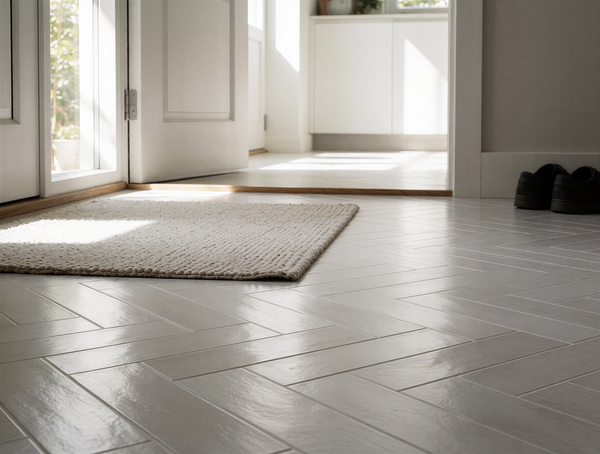
For bathroom floors specifically, a matte or textured porcelain finish provides the grip needed to prevent slipping. Glossy porcelain is better suited for walls.
Best for: Master bathrooms, high-traffic family bathrooms, wet rooms, and anywhere durability is the priority.
Ceramic Tile: The Budget-Friendly Alternative
Ceramic shares many of the visual benefits of porcelain and is available in a wide range of colors and patterns. It is lighter, easier to cut, and costs less per square foot.
Best for: Guest bathrooms, powder rooms, low-traffic areas, and budget-conscious renovations.

Natural Stone: The Luxury Option
Marble, slate, travertine, and granite bring authentic texture and natural beauty to bathroom floors that no manufactured tile can fully replicate. Natural stone is porous and must be sealed at installation and resealed annually or biannually.
Best for: High-end primary bathrooms, spa-inspired designs, and feature floors in low-traffic spaces.
Tile Size Guide for Bathroom Floors
- Small formats (1x1 to 4x4 inch): More grout lines create better traction. Mosaic tiles and small format tiles are ideal for shower floors and wet rooms.
- Medium formats (6x6 to 12x12 inch): Versatile and timeless. Work well in both small and larger bathrooms.
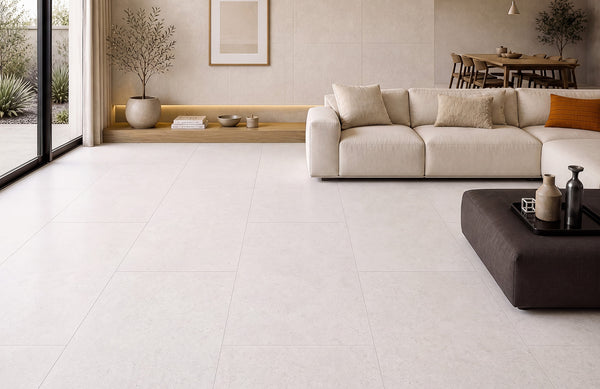
- Large formats (12x24 to 24x24 inch): Fewer grout lines create a cleaner, more spacious look. Large format tiles work best in larger bathrooms or open floor layouts.
- Rectangular formats (4x12, 4x16): Popular for contemporary bathrooms. Laid horizontally to add width or vertically to add height.
2026 Bathroom Floor Tile Trends
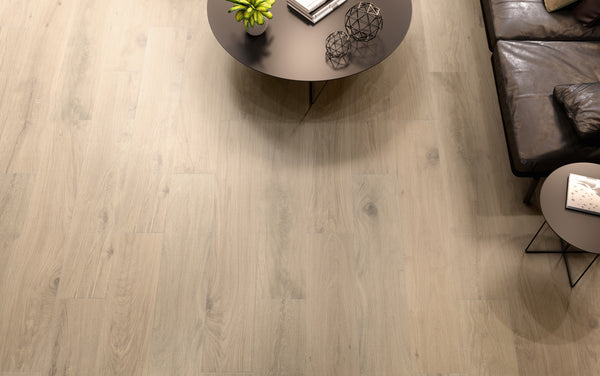
- Warm neutrals: Beige tiles, soft taupes, warm gray tiles, and creamy white tiles are replacing cooler gray palettes.
- Textured and handmade-look finishes: Surfaces that add grip and organic character are popular for bathrooms with a softer, less polished feel.
- Large-format matte porcelain: Clean, minimal aesthetics with fewer grout lines.
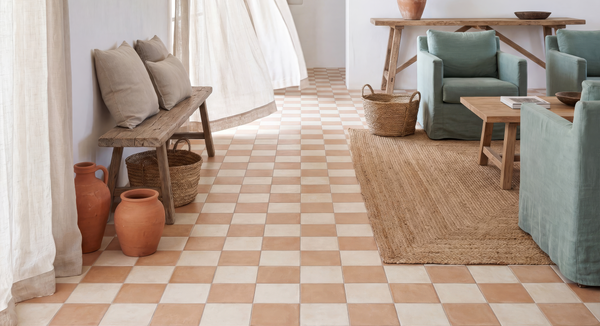
- Terrazzo looks: Terrazzo-inspired patterns are making a strong comeback in both traditional and contemporary bathrooms.
- Warm-toned stone looks: Travertine tiles, limestone tiles, and stone look tiles continue to trend for spa-inspired bathroom floors.
Shop Bathroom Floor Tile at Tile Mart
Browse Tile Mart's full bathroom tile collection, including porcelain floor tiles, ceramic tiles, natural stone, mosaic tiles, and large format tiles. Order samples to evaluate finish, texture, and color in your space before committing.
Frequently Asked Questions
What is the safest tile for a wet bathroom floor?
Matte or textured porcelain is one of the safest options for a wet bathroom floor. Smaller format tiles, especially mosaics, can also provide additional traction because the extra grout lines help create more grip underfoot.
Is porcelain or ceramic better for bathroom floors?
Porcelain is the stronger choice for bathroom floors. Browse porcelain tiles for high-moisture applications or ceramic tiles for lower-traffic areas and budget-conscious projects.
Can you use large tiles in a small bathroom?
Yes. Large-format tiles reduce grout lines and can make a small bathroom feel larger. Explore Tile Mart's large format tiles to see available sizes.
How long does bathroom floor tile last?
Porcelain and ceramic tile floors can last for decades with proper installation and care. Grout may need to be resealed, refreshed, or replaced over time depending on use and exposure.