



Education

Quick Summary
A Victorian tile floor already makes a strong visual statement, so the best decorating choices balance it rather than compete with it. Neutral walls, layered textures, vintage-inspired accents, and a well-chosen rug help highlight the tile's detail while keeping the room comfortable and easy to live in.
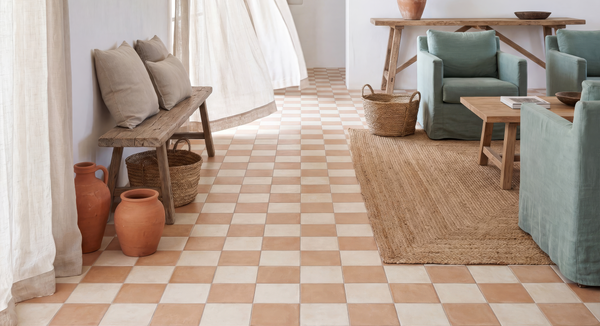
A Victorian tile floor is a statement piece. Its intricate geometric patterns, checkerboards, and borders do more than cover a surface: they set the mood for the entire room. We carry a wide range of encaustic-look tiles and checkerboard tiles that make it easy to recreate that timeless Victorian look in a modern home.
Understanding the Victorian Tile Floor Look
Victorian tiles rose to popularity in the mid-19th century, when mass production made decorative flooring accessible to more homes. Hallways, porches, and kitchens became showcases for encaustic and geometric designs in deep reds, buff tones, black, and white. The patterns were bold, symmetrical, and built to last.
Today, the same designs feel right at home in modern spaces. You don't need to recreate a museum piece. The goal is to let the floor anchor the room while the rest of the decor supports it.

Metro White With Black Dot 2" Octagon Matte Porcelain Mosaic from our Metro series
The octagon-and-dot layout above is one of the most recognizable Victorian floor patterns, and it's the one you'll still find in early-1900s bathrooms and entryways across the country.
6 Decorating Tips for Victorian Tile Floors
Let the Floor Be the Star
A patterned Victorian floor naturally pulls the eye, so don't compete with it. Keep your walls, cabinets, and large furniture pieces simple and neutral. Soft whites, warm greys, and natural wood tones let the floor shine without making the room feel busy. A ceramic tile floor in a classic checkerboard or geometric motif becomes the natural focal point, so let it command the attention it deserves.

Frame 15 Providence 6X6 Matte Porcelain Tile from our Frame 15 series
Use Borders to Define Zones
Borders are a hallmark of Victorian tile design. A contrasting border around the edge of a room frames the pattern and gives the floor a finished, intentional look. In open-plan spaces, use a border to visually separate the kitchen from the dining area or mark an entryway. This old-world technique still works well in modern homes, and it's an easy way to bring traditional tile detailing into an otherwise contemporary layout.
Pick Decor That Matches the Era, Not the Exact Pattern
You don't need period furniture to live with a Victorian floor. Choose a few pieces that echo the era, such as a turned-leg table, a velvet armchair, or a vintage mirror. Then mix in clean-lined modern sofas or simple shelving. The contrast between old and new gives the room depth and keeps it from feeling like a theme park.
Pull Colors From the Tile
Look closely at your floor and you'll see subtle tones beyond the main black, white, or terracotta. Pull one of those secondary shades for your wall color, window treatments, or accent pillows. If your tile has a hint of soft green or warm buff in the design, repeating that color elsewhere creates a room that feels pulled together rather than decorated in pieces.
Match Grout to Your Goal
Grout color changes everything. Matching grout to the tile softens the pattern and creates a more seamless, modern look. Contrasting grout highlights every geometric shape and makes the pattern pop. Victorian tiles with light stone set against dark grout lines feel dramatic and graphic, while the same tile with matching grout feels subtle and blended. Decide which effect fits your space before installation begins, and pull a physical grout sample alongside your tile sample so you can see the real contrast in your own lighting.
Extend the Look Beyond the Floor
Victorian tile doesn't have to stop at the floor. A tiled hearth, a porch entry, or even a backsplash in a compact geometric layout can tie different parts of your home together. Using the same pattern language in multiple rooms creates flow between them.

Domino Black & White Basketweave Matte Porcelain Mosaic from our Domino series
A bathroom floor in a classic basketweave pattern can echo the same black-and-white motif used on a kitchen backsplash, making the whole home feel connected. We're happy to help you find those connections across different rooms and surfaces.
Caring for Your Victorian Tile Floor
Victorian tiles are durable, but they need the right care to stay beautiful. Sweep or vacuum regularly to remove grit that can scratch the surface. Use a pH-neutral cleaner for mopping, and avoid harsh acidic products, which can etch the tile and damage the grout over time.
Sealing matters too. Most Victorian-style tiles are porous and benefit from a penetrating sealer applied every one to two years. Ask your installer or a Tile Mart team member about the right sealer for your specific tile material, since natural stone and porcelain call for different products. With good maintenance, a Victorian tile floor can easily last a lifetime. A subway tile backsplash paired with a matching geometric floor gives a kitchen a pulled-together, heritage feel that stays fresh for years.
FAQs
Can I use Victorian tile in a modern home?
Yes. Victorian tiles add structure and character to modern spaces without making them feel old-fashioned. Stick to a restrained color palette like black, white, and grey, and keep the surrounding decor simple.
What colors work best with a Victorian tile floor?
Neutrals always work well. Soft white walls, warm wood furniture, and muted textiles let the floor take center stage. For a bolder look, pull a secondary accent color from the tile itself, such as a dusty blue or warm terracotta, and use it in accessories or paint.
Are Victorian tile floors hard to maintain?
Not at all. Regular sweeping and occasional mopping with a pH-neutral cleaner keeps them looking fresh. Seal the tile every year or two to protect against stains and moisture.
Can I install Victorian tiles over underfloor heating?
Yes. Victorian-style ceramic and porcelain tiles conduct heat well and work with most underfloor heating systems. Always check with your installer and the tile manufacturer for the right installation method.