

Education

Gray grout is the best all-around choice for white subway tile. It provides subtle definition without the starkness of black or the higher maintenance needs of white grout. For a seamless, modern look, white-on-white grout creates a nearly unbroken plane of color. Black grout creates a bold, graphic effect that works best in smaller doses, accent areas, or high-contrast backsplash tile designs.
Quick Answer
The most popular grout colors for white subway tile are gray, white, and black. Gray is the most versatile and easiest to maintain. White creates a classic seamless look but requires more upkeep. Black grout creates bold contrast with low maintenance but a much stronger visual effect. Beige and cream are warm alternatives that work well with off-white tile, warm interiors, and traditional bathroom tile designs.
How Grout Color Changes the Look of White Subway Tile
Grout Color |
Visual Effect |
Maintenance Level |
Best Room |
White |
Seamless, crisp, spa-like |
High, shows staining |
Primary baths, low-grease backsplashes |
Light gray |
Subtle definition, soft contrast |
Low to moderate |
Showers, kitchens, any bathroom |
Charcoal or dark gray |
Strong definition, contemporary |
Low |
Kitchens, modern bathrooms |
Black |
Bold, graphic, dramatic |
Very low |
Powder rooms, accent backsplashes |
Beige or cream |
Warm, soft, transitional |
Moderate |
Traditional bathrooms, warm interiors |
Colored grout |
Bold accent, design statement |
Varies |
Children's bathrooms, accent walls |
White Grout with White Subway Tile
White-on-white is the most classic and timeless combination. The grout nearly disappears into the tile surface, creating a clean, continuous plane. It is a go-to look for spa-inspired bathrooms, modern minimalist kitchens, and bright wall tile installations.
The trade-off: White grout shows soap scum, mildew, and staining more readily than darker grout colors. Epoxy grout in white is a significant upgrade because it is more resistant to staining and discoloration than traditional cementitious grout.
Best for: Primary bathrooms, formal powder rooms, and kitchen backsplashes away from the cooking zone.

Gray Grout with White Subway Tile
Light to medium gray grout is the most popular and practical choice. It provides enough contrast to define the tile shape without the drama of black. It hides everyday staining better than white grout, particularly in showers where soap residue accumulates. Gray grout also conceals discoloration better over time, so it looks less dated as it ages.
Best for: Shower walls, kitchen backsplashes, bathroom floors, and any high-traffic or high-moisture application.

Black Grout with White Subway Tile
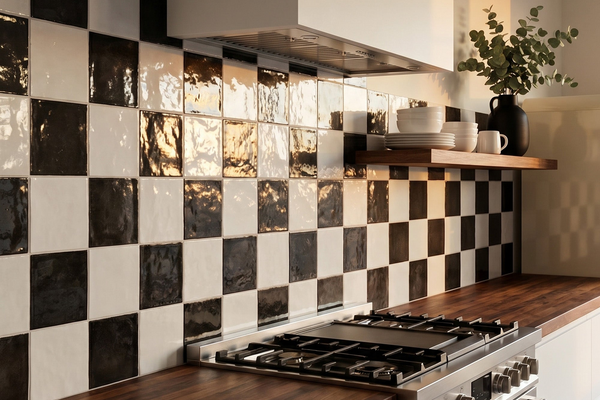
Black grout with white subway tile is a high-contrast, graphic combination that makes a bold statement. It outlines each tile clearly and creates a strong geometric pattern. Black grout also hides staining very effectively, which makes it practical in the right setting.
Best for: Powder rooms, kitchen backsplashes, bar areas, and feature walls where a graphic, high-contrast look is intentional.

Beige or Cream Grout with White Subway Tile
Beige and cream grout soften the appearance of white tile and create a warmer, more transitional look. These grout colors pair especially well with beige tiles, warm white tile, wood cabinetry, brass fixtures, and farmhouse-inspired interiors.
Always test samples together. Pure white tile with warm beige grout can look slightly yellowed if the tones are not carefully coordinated.
Best for: Traditional bathrooms, farmhouse-style kitchens, and spaces with warm wood tones or brass fixtures.

Grout Type Matters as Much as Grout Color
Cementitious grout
Cementitious grout, including sanded and unsanded grout, is the most common and affordable option. It usually requires sealing in wet areas and is more susceptible to staining over time. Sanded grout is commonly used for wider joints, while unsanded grout is typically used for narrower joints.
Epoxy grout
Epoxy grout is far more stain-resistant and durable than cementitious grout. It does not require sealing and is one of the best choices for showers, kitchen backsplashes, and anywhere long-term maintenance is a concern.
Urethane grout
Urethane grout is a flexible, pre-mixed grout that is stain-resistant and easier to apply than epoxy. It can be a strong middle-ground option for many bathroom and kitchen applications.
Room-by-Room Grout Color Recommendations
- Primary shower walls: Light or medium gray. It balances appearance and maintenance well.
- Shower floor: Medium gray or charcoal. These colors hide soap scum and residue more effectively.
- Kitchen backsplash near the stove: Gray or charcoal. These colors hide grease staining better than white.
- General kitchen backsplash: White or light gray. Both work well away from heavy grease zones.
- Powder room: Any color works because low traffic and low moisture make this a good place to be bold.
- Bathroom floor: Medium gray or charcoal for practical maintenance on floor tile.
Tips Before You Commit
- Always test grout color samples against your actual tile before ordering.
- View samples under both natural light and artificial lighting because grout color can shift between conditions.
- Consider your fixture and hardware finishes. Chrome and nickel often pair well with cool gray grout, while brass and bronze work better with warmer tones.
- If you choose white grout, consider epoxy grout or a high-performance sealer from the start.
- For shower floors, small-format mosaic tiles with gray or charcoal grout are often easier to maintain than bright white grout.
Shop White Subway Tile at Tile Mart
Find your perfect white subway tile in our subway tile collection, along with a full range of backsplash tiles, bathroom tiles, kitchen tiles, shower tiles, and porcelain tiles.
Before committing to a full order, get samples and compare the tile with your grout options in the actual room. Lighting, cabinet color, countertop material, and fixtures can all change how the grout looks once installed.
Frequently Asked Questions
Does white grout with white tile look good?
Yes, it creates a clean, seamless look that is timeless and works in most design styles. The trade-off is maintenance. White grout shows staining more than gray or dark grout. Epoxy grout in white can significantly reduce this concern.
What is the easiest grout color to maintain?
Medium gray, dark gray, charcoal, and black grout are the easiest to maintain because they conceal everyday staining, soap scum, and mild discoloration more effectively than lighter grout colors.
Can you change grout color without re-tiling?
Yes. Grout can be stripped and replaced without removing the tiles, though it is labor-intensive. Grout colorants and stains can also be applied over existing grout to change the color with less effort.
Should floor and wall grout be the same color?
Not necessarily. Many designers use a slightly darker grout on floors than on walls. This helps conceal foot traffic staining while keeping wall tile bright and clean-looking.