


Education

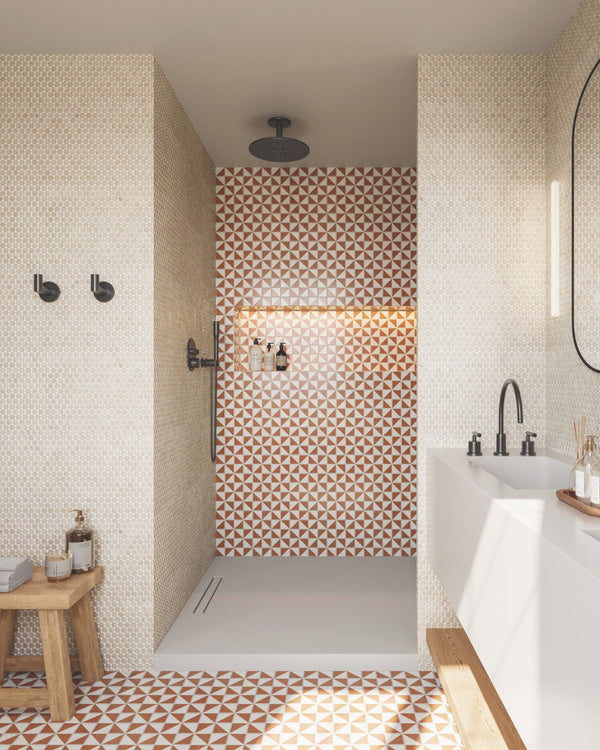
Hexagon tile is one of the best choices for a shower floor when the tile is small enough to follow the slope of the shower pan. Small hexagon mosaics create more grout lines than large-format tile, which can improve traction in a wet environment. The look is timeless, available in porcelain, ceramic, marble, and glass, and works equally well in traditional, modern, and transitional bathrooms.
Quick Answer
Hexagon tile works well on shower floors because smaller hex formats add grout-line traction and can follow the slope around a drain more easily than large tiles. Small hex tiles, usually 1 to 2 inches, provide the most grip and suit compact shower floors. Larger hex formats, such as 4 to 6 inches, create a bolder look and require less grout maintenance. For material, porcelain tile is the most practical choice because it is dense, durable, and does not require sealing.
Pros and Cons of Hexagon Tile Shower Floors
Pros
- More grout-line traction: Small hexagon tiles create more grout lines than large-format tile, which can improve grip underfoot in wet conditions.
- Timeless look: Hex tile has been used in bathrooms for generations and still works in modern, classic, and transitional spaces.
- Versatile scale: Hexagon tile is available from small mosaic sheets to larger statement formats.
- Wide material range: Available in porcelain, ceramic, marble, and glass.
- Works in small spaces: Hexagon mosaics add visual interest without overwhelming a compact shower floor.
- Strong design flexibility: Use a single color for a classic look or mixed colors for a more graphic effect.
Cons
- More grout to clean: More grout lines mean more surface area that requires regular maintenance.
- Complex installation: Six-sided tiles require precise cutting at borders, corners, drains, and niches. Professional installation is recommended.
- More material waste: Irregular cut angles can generate more waste than simple rectangular tile layouts.
- Grout color choice matters: The grout network is a major visual element, especially with small-format hex mosaics.
- Polished finishes can be slippery: Choose matte, honed, or textured finishes for shower floors and confirm the tile is appropriate for floor use.
Hexagon Tile Size Guide
Size |
Grout Lines |
Best Application |
Visual Effect |
1 inch |
Maximum |
Shower floors, wet rooms |
Fine mosaic texture with strong grout-line traction |
2 inch |
High |
Shower floors, feature areas |
Classic hexagon mosaic tile look with good traction |
4 inch |
Moderate |
Shower floors, bathroom floors |
Visible pattern with manageable maintenance |
6 inch |
Lower |
Bathroom floors, large shower floors |
Bolder hex pattern with less grout to clean |
12 inch |
Minimal |
Bathroom floors, feature walls |
Bold architectural hex pattern |

Best Materials for Hexagon Shower Floor Tile
Porcelain hex tile
Porcelain tile is the strongest and most practical choice for most shower floors. It is dense, low-maintenance, and available in matte or textured finishes that are better suited for wet floors than polished surfaces. Porcelain does not require sealing and resists staining from soap and shampoo.
Best for: Most shower floors, especially bathrooms with heavy daily use.
Ceramic hex tile
Ceramic tile is a more affordable alternative to porcelain. It works well for bathroom walls, shower walls, and some bathroom floor areas when the tile is rated for floor use. For shower floors with constant water exposure, porcelain is usually the safer long-term choice.
Best for: Budget-conscious projects, shower walls, and bathroom floor areas with moderate traffic.
Marble hex tile
Marble tile in a hexagon format creates a luxurious shower floor with natural veining and variation. It requires sealing before use and regular resealing over time. Honed or brushed marble is a better choice for floors than polished marble.
Best for: High-end primary bathrooms where natural stone character is the priority and regular maintenance is expected.
Glass hex tile
Glass tile is non-porous and works well on shower walls, accent bands, and decorative niches. For shower floors, choose textured or frosted glass only when the product is rated for floor use and has appropriate slip-resistance information.
Best for: Accent areas, shower walls, and approved shower floor applications.

Installation Tips for Hexagon Shower Floors
- Use pre-mounted mesh sheets: Most small-format mosaic tiles come on mesh sheets for faster installation and more consistent spacing.
- Plan your layout first: Center the hex pattern in the shower floor and work outward so border cuts look balanced.
- Use the right thinset: White polymer-modified thinset is often used with lighter tile to help prevent adhesive shadowing.
- Confirm grout joint size: Small hex tiles, usually 1 to 2 inches, often use narrow grout joints. Always check the tile manufacturer’s specification.
- Seal the grout: Use epoxy grout or seal traditional grout at installation. Resealing may be needed depending on grout type and shower use.
- Hire an experienced installer: The number of cuts required at borders, drains, and niches makes hexagon tile more complex than basic rectangular formats.
Grout Color for Hex Tile
Because hexagon tile has more visible grout lines than many larger tile formats, grout color has a major impact on the final look. Dark grout with light hex tile creates a bold, graphic effect. A matching or near-matching grout creates a softer, more subtle surface. For shower floors, gray or charcoal grout often hides soap residue and mineral staining better than bright white grout.
Where Hexagon Tile Works Best
Hexagon tile works especially well in bathrooms, shower floors, powder rooms, and small accent areas where the pattern can add detail without overwhelming the space. Small hexagon mosaic tiles are ideal for shower floors, while larger hex tiles can make a stronger statement on bathroom floors or wall tile features.

Shop Hexagon Tile at Tile Mart
Explore Tile Mart's selection of hexagon tiles and hexagon mosaic tiles, including options in porcelain, ceramic, marble, and glass. You can also browse mosaic tiles, bathroom tiles, shower tiles, floor tiles, and wall tiles to find the right combination for your project.
Frequently Asked Questions
Is hexagon tile slippery in a shower?
It depends on the material, finish, and product rating. Matte or textured porcelain hex tile is usually a strong choice for shower floors. Polished ceramic, polished marble, or glossy glass can be slippery when wet. Always confirm the wet DCOF rating or floor-use suitability before purchasing shower floor tile.
How do you keep hex tile grout clean in a shower?
Use epoxy grout or seal traditional grout at installation. Clean regularly with a pH-neutral cleaner and avoid harsh acidic products. Squeegeeing after each shower can also reduce soap scum and mineral buildup.
What size hexagon tile is best for a small shower floor?
Small-format hex tiles, usually 1 to 2 inches, are the traditional choice for small shower floors because they are proportional, classic, and provide strong grout-line traction. Larger hex tiles, such as 4 to 6 inches, can also work in compact showers if the slope and drain layout allow it.
Can hexagon tile be used on shower walls?
Yes. Hexagon tile looks great on shower walls as an accent band, niche, or full feature wall. Browse shower tiles and wall tiles at Tile Mart to find the right hex option for your project.