





Learn more about Hardwood Flooring
What Is Hardwood Flooring?
Hardwood flooring is a floor made from real wood, milled into planks and finished to take foot traffic. It comes in two constructions. Solid hardwood is cut as a single piece of wood. Engineered hardwood is multi-ply: a real hardwood veneer bonded over a cross-grain plywood core.
We carry engineered hardwood flooring in oak. The surface you walk on is genuine wood, not a printed film, and the wear layer is thick enough to sand and refinish more than once.
Solid vs Engineered Hardwood Flooring
Both are real wood. The difference is what sits under the surface, and it changes where each one can go.
Solid hardwood is one piece of wood all the way through. It can be refinished many times over a long life, but it expands and contracts with humidity, so it wants a wood subfloor above grade and a stable room.
Engineered hardwood has a real wood wear layer over a cross-grain core. Those crossed layers pull against each other as humidity changes, which means far less seasonal movement than a solid plank. That stability is why engineered hardwood handles wider planks and less forgiving subfloors.
What engineered hardwood is not is laminate or vinyl. Laminate and luxury vinyl use a printed image of wood under a wear coat. Engineered hardwood has actual oak on top, which is why it can be refinished and they cannot.
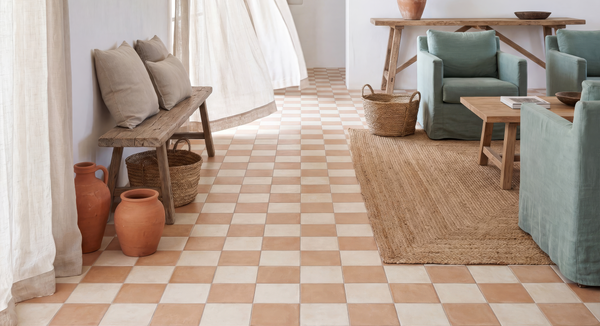
If you want a wood look with full water resistance, wood look tile and wood-look vinyl flooring are the alternatives to compare.
Oak Hardwood Flooring
Oak is the most widely specified species in hardwood flooring, and it is the species we stock: European white oak, European oak, and French oak.
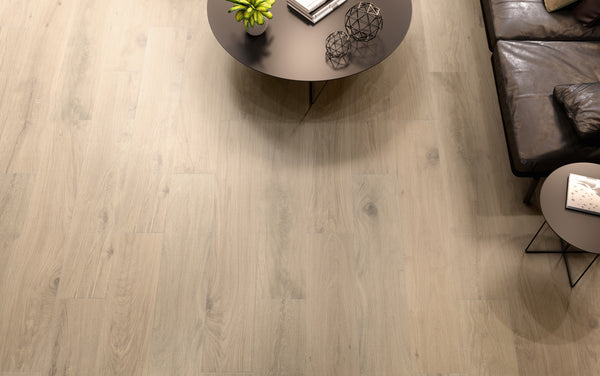
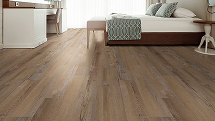
White oak reads warm and neutral. It has a tighter grain than red oak and none of the pink undertone, which makes it easier to pair with cool greys, warm creams, and black or brass hardware. Our tones run light and coastal rather than dark: pale sand, soft greige, warm honey, and light grey-brown, all in a natural finish that leaves the grain visible instead of burying it under heavy stain.
Expect variation, and expect it to keep changing. Real oak carries knots, mineral streaking, and shifts in tone from board to board. Direct sunlight will also move the color over the years, which is normal for any wood floor rather than a fault. Blend boards from several cartons as you lay them, and dry-lay a mock section under the room's own lighting before anything goes down for good.
Wide Plank Hardwood Flooring
Wide plank means boards roughly 5 inches and up. Ours run wider than that, in 7.5 and 9.5 inch widths.
Width changes how a floor reads at scale. A 9.5 inch plank puts far fewer seams across a room than a 3 inch strip floor, so your eye travels further before it meets a line. In an open-plan space that makes the floor feel continuous. In a small room the same width can look oversized, because you may only fit three or four boards across.
Plank lengths vary within a carton, which is normal for wide plank oak. Long boards cut down the number of end joints, and the shorter ones get worked in as you go, so order enough material to stagger the joints properly.
Where Hardwood Flooring Works
Living and dining rooms. This is where wide plank oak makes the most difference. Long, wide boards in a natural finish suit open layouts where one floor runs continuously between zones.
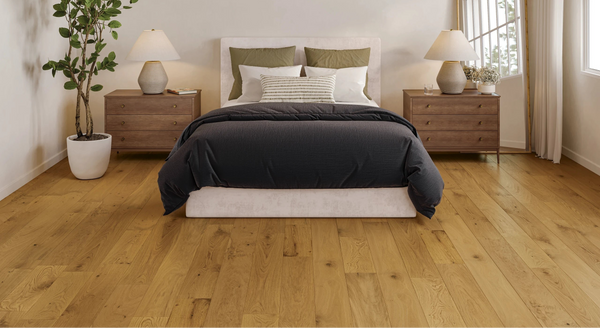
Bedrooms. Wood is quieter and warmer underfoot than floor tile, which keeps it a first choice for bedrooms, and a bedroom's light traffic is easy on the finish.
Kitchens. Engineered hardwood works in a kitchen if you are realistic about spills. Wipe standing water promptly and put a mat at the sink. If the room takes heavy traffic, kitchen tile is the more forgiving surface.
Basements. A cross-grain core copes with slab conditions better than a solid plank, but below grade is still the hardest place to put a wood floor. Test the slab for moisture, confirm the method with the manufacturer before you order, and treat vinyl as the safer choice if the reading comes back high.
Bathrooms and showers. Our hardwood is rated for interior floors, not for shower floors or shower walls, and we do not recommend it in a full bathroom. Standing water and sustained humidity are hard on any wood floor, so use bathroom tile there instead.
How to Choose Hardwood Flooring
Check the wear layer first. The wear layer is the real wood on top, and it sets how many times a floor can be sanded and refinished over its life. A thicker wear layer costs more up front and buys you more decades.
Match the method to the manufacturer, not to habit. Engineered hardwood can be glued, floated, or nailed depending on the product, and most warranties name one approved method and one approved adhesive. Confirm both before you buy anything to install it with.
Test a concrete slab for moisture before you order. Slabs keep releasing moisture for months after they are poured, and any wood floor laid over a wet slab will fail. A calcium chloride or in-slab probe test costs very little next to replacing a floor.
Scale plank width to the room. In a large or open room, go as wide as you like. In a narrow hallway or a small powder room, a 9.5 inch board can read heavy against the walls.
Order more than your square footage. Between varied plank lengths, cuts at the walls, and boards you set aside for tone, a straight square-foot order will leave you short. Add the usual waste allowance and keep a spare carton for repairs, because wood shifts in shade between production runs.


