


Education

Glazed porcelain tile in large-format sizing paired with epoxy grout is the lowest maintenance shower tile combination available. The glazed porcelain surface repels soap scum, resists staining, and requires no sealing. Fewer grout lines, and grout that does not need regular sealing, reduce the primary source of shower cleaning effort to nearly nothing.
Quick Answer
The lowest maintenance shower tile options are: (1) glazed large-format porcelain, fewest grout lines, non-porous surface, no sealing required, (2) standard glazed porcelain tile, durable and easy to wipe clean, (3) glazed ceramic tile on walls, affordable and smooth, and (4) glass tile on walls, completely non-porous. The single biggest upgrade for any shower is switching from standard cementitious grout to epoxy grout.
What Makes a Shower Tile Low Maintenance?
Maintenance burden in a shower tile installation comes from two sources: the tile surface and the grout. Addressing both is the key to a genuinely easy-care shower.
Tile surface factors
-
Porosity: Non-porous tiles do not absorb soap, minerals, or mold spores. They clean with a wipe rather than a scrub. -
Glaze: A glazed surface creates a smooth, sealed barrier that resists buildup. -
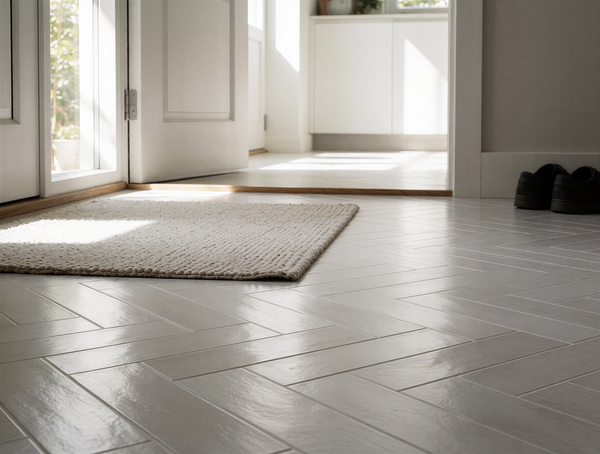
Finish: Matte finishes hide water spots better than polished tiles, though both are easy to wipe clean. For a softer bathroom look, many shoppers choose white tiles, beige tiles, or warm gray tiles.

Grout factors
-
Grout density: Fewer grout lines mean less surface area to clean and maintain. -
Grout type: Epoxy grout is far more stain-resistant and mold-resistant than traditional cementitious grout and does not require sealing. -
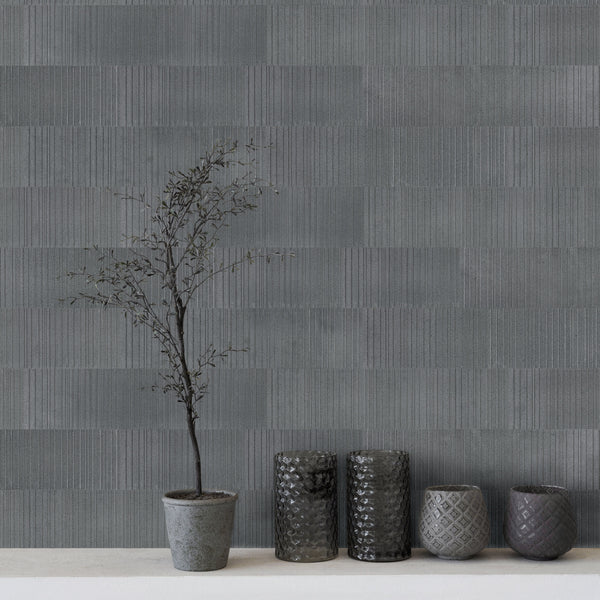
Grout color: Darker grout colors hide staining and discoloration between deep cleans, especially with black tiles, charcoal tile, or darker mosaic patterns.
Low Maintenance Shower Tile Options Ranked
| Tile Type | Maintenance Level | Sealing Required | Key Benefit |
|---|---|---|---|
| Glazed porcelain large format tile | Very Low | No | Fewest grout lines, non-porous surface |
| Glazed porcelain tile | Low | No | Durable, easy to clean, versatile |
| Glazed ceramic tile for walls | Low | No | Affordable and smooth surface |
| Glass tile for walls | Low | No | Non-porous, reflective, hygienic |
| Marble-look porcelain tile | Low | No | Luxury look without stone maintenance |
| Polished natural marble tile | High | Yes (annual) | Beautiful but demanding |
| Slate / travertine tile | Very High | Yes (frequent) | Textured surface traps residue |

Best Low Maintenance Options for Shower Walls
1. Glazed porcelain tile
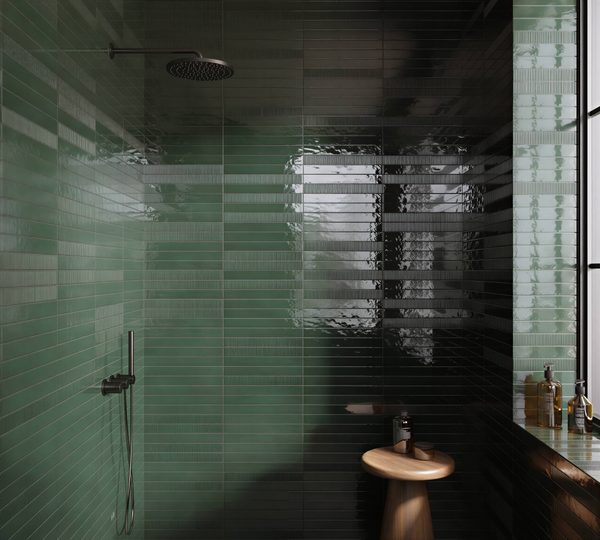
The top recommendation for shower walls. Non-porous, smooth, and cleans with a damp cloth or standard bathroom cleaner. No sealing required. Resistant to soap scum and mineral buildup. Larger formats, including 4x12, 4x16, and 12x24, reduce grout lines and further lower maintenance.
For shower walls, wall tiles in porcelain, ceramic, or glass are the easiest to maintain when the surface is smooth or only lightly textured. If you want a clean modern look, large format tiles work especially well because they reduce the number of grout joints across the wall.

2. Glass tile
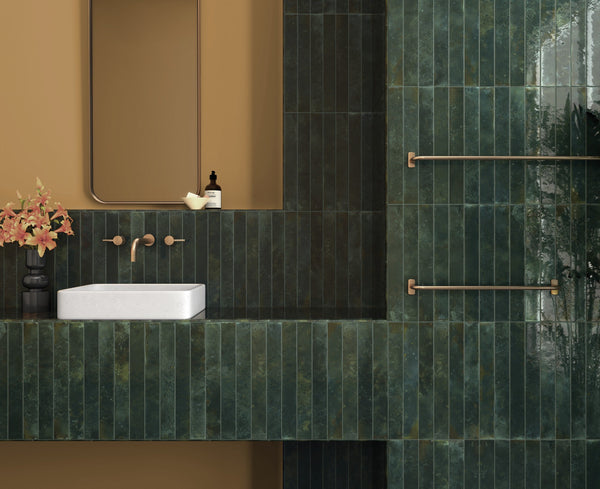
Glass is completely non-porous, so mold and bacteria have no surface to penetrate. A quick wipe keeps it clean. Works well on shower walls where its reflective quality brightens the space. Not recommended for shower floors unless it carries a certified slip resistance rating.
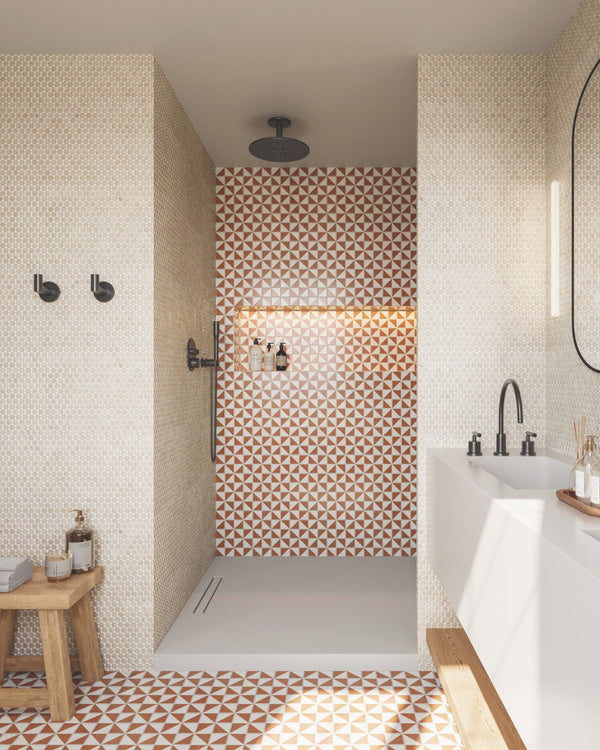
For a decorative shower wall accent, herringbone mosaic tiles, brick mosaic tiles, and linear mosaic tiles can add pattern while still using durable, wipeable materials.

3. Large-format porcelain slabs
The minimum-maintenance option. Large-format slabs, 24x48 or larger, can tile an entire shower wall in one or two pieces with very few grout lines. These require professional installation and a very flat wall substrate.
Best Low Maintenance Options for Shower Floors
1. Large-format textured porcelain
In showers designed with the right slope and drain system, larger matte or textured porcelain tiles can reduce grout lines and cleaning effort. For standard shower floors, porcelain mosaics are often easier to slope properly and provide more grout-line traction.
When the shower floor needs smaller pieces to follow the slope, mosaic tiles are usually the more practical choice. They provide more grout-line traction and can be easier to install around center drains, linear drains, and tight shower corners.
2. Glazed porcelain mosaics with epoxy grout
If you prefer the classic small-format mosaic floor for its traction and look, using epoxy grout dramatically reduces maintenance. Epoxy grout resists staining, mold, and discoloration far better than standard grout and does not require sealing.

Common shower floor mosaic shapes include square mosaic tiles, hexagon mosaic tiles, penny round mosaic tiles, and pebble mosaic tiles. These smaller formats can follow shower slopes more easily than oversized tiles and add grip underfoot through additional grout lines.
3. Rectified large-format tiles with tight joints
Rectified tiles are cut to very precise dimensions, allowing grout joints as narrow as 1/16 inch. Less grout equals less cleaning. This approach paired with epoxy grout creates one of the lowest maintenance shower floor solutions available.
If you want a more decorative shower floor, consider octagon mosaic tiles, basketweave mosaic tiles, chevron mosaic tiles, or picket mosaic tiles. These patterns add visual interest while staying practical for smaller shower floor layouts.

High Maintenance Materials to Avoid (or Use Carefully)
-
Unpolished natural stone, including travertine and slate: Highly textured surfaces trap soap residue, mineral deposits, and mold. Requires frequent sealing and more aggressive cleaning. -
Polished marble: Vulnerable to etching from acidic shampoos and soaps. Requires annual sealing and careful product selection. -
White cementitious grout on shower floors: Stains visibly and requires scrubbing to maintain. Replace with epoxy grout or a dark cementitious grout. -
Heavily textured wall tile: Deep texture traps soap scum and is harder to clean thoroughly. Smooth or subtly textured tile cleans far more easily.
The Grout Upgrade That Changes Everything
No single decision reduces shower tile maintenance more than switching from standard cementitious grout to epoxy grout. Standard grout is porous, requires annual sealing, absorbs soap residue and minerals, and discolors over time. Epoxy grout is non-porous, requires no sealing, resists staining from day one, and maintains its color for years.
The trade-off is cost and installation complexity. Epoxy grout is more expensive and more difficult to apply, which typically increases labor costs. For shower floors particularly, the long-term maintenance savings make it worthwhile.

Daily Habits That Reduce Shower Maintenance
- Squeegee walls and floor after each shower. This single habit reduces mineral buildup and soap scum dramatically.
- Run the exhaust fan during and for 20 minutes after showering.
- Use a daily shower spray, preferably pH-neutral, to slow mineral and soap film accumulation between cleans.
- Fix caulk and grout promptly when cracking appears, since water infiltration behind the tile creates mold that is much harder to address.
Shop Low Maintenance Shower Tile at Tile Mart
Tile Mart carries a full range of porcelain tiles, large format tiles, ceramic tiles, glass tiles, mosaic tiles, small format tiles, and shower tiles suited to low-maintenance shower projects. Browse the full bathroom tile collection and order samples to compare materials in person before purchasing.

Frequently Asked Questions
What shower tile is easiest to keep clean?
Glazed porcelain tile in large formats is the easiest to maintain. The glazed surface wipes clean without scrubbing, and larger tile format means fewer grout lines to manage. Pairing it with epoxy grout eliminates the primary maintenance challenge.
Is porcelain tile low maintenance in a shower?
Yes. Glazed porcelain tiles do not require sealing, resist staining and moisture, and clean easily with standard bathroom cleaners. They are the most recommended material for shower applications across all budget levels.
What mosaic tile shape is best for shower floors?
Square mosaics, hexagon mosaics, and penny round mosaics are popular shower floor options because the smaller pieces can follow the shower slope and add grout-line traction.
What is the best grout for a low maintenance shower?
Epoxy grout is the best choice. It is non-porous, does not require sealing, resists mold and staining, and holds its color significantly longer than standard cementitious grout.
Does large-format tile actually reduce shower cleaning?
Yes. Grout is the primary cleaning challenge in any tile shower. Large format tiles mean fewer grout lines, which directly reduces the amount of grout surface that needs to be cleaned and maintained over time.