


Education

Quick Summary
Herringbone tile layouts add movement and visual texture without requiring bold colors or oversized patterns. They work especially well in kitchens, bathrooms, backsplashes, and entryways where homeowners want a more detailed, high-end appearance without overwhelming the space.
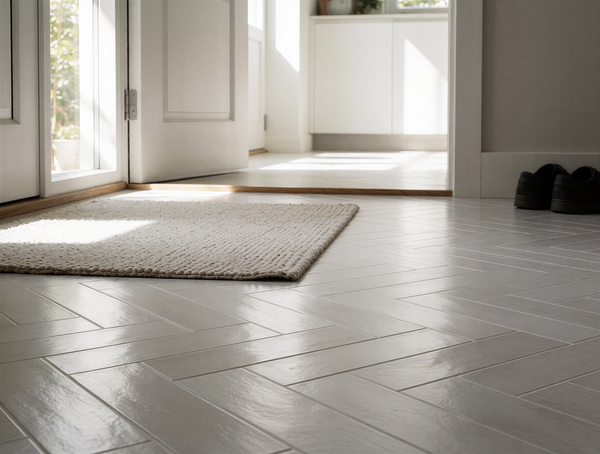
A simple change in layout can completely transform a room. The tile herringbone pattern proves it. Instead of straight rows, rectangular tiles meet at right angles to form a staggered V-shape that pulls the eye across the surface.
At Tile Mart, our tile collections offer a wide range of materials perfect for this classic layout, from warm terracotta tiles to crisp glass tiles and easy-care porcelain tiles.
Why the Pattern Works
Herringbone adds movement without chaos. The repeating V creates a visual rhythm that feels energetic yet calm. It also changes how a room feels. Installed vertically on a wall, the pattern draws the eye upward and makes ceilings appear taller. Laid horizontally, it widens a narrow space. On floors, it stretches out the area. This makes herringbone a smart pick for small bathrooms, galley kitchens, compact entryways, and statement wall tile installations.
Kitchen Ideas That Stand Out
A backsplash is one of the easiest places to try this layout. White subway tile set in herringbone with matching grout creates a clean, traditional look that never goes out of style. For a bolder statement, use black tiles or dark charcoal tile with light grout. The contrast highlights every angle and gives the kitchen a modern edge.
Herringbone also works on kitchen floors. Wood look porcelain tiles or plank-style porcelain in this layout bring warmth underfoot. Porcelain handles spills and heavy foot traffic easily, so it is a practical choice for busy homes.

Bathroom Designs with Lasting Appeal
Bathrooms are where the tile herringbone pattern really shines. The layout plays well with water, light, and steam, especially when you use marble tiles, marble-look porcelain, or glazed ceramic. Marble herringbone on a shower wall creates a spa-like feel that is both luxurious and timeless.
On bathroom floors, smaller mosaic tiles offer better grip than large format tiles because the extra grout lines add traction. Mesh-backed sheets also make installation easier in tight spaces like a powder room or shower floor.
Fresh Ways to Style the Pattern
You do not need to cover an entire room to enjoy herringbone. Try these creative approaches:
- An accent stripe running through a straight-lay floor tile installation adds surprise and draws the eye through an open-plan space.
- A fireplace surround in marble tile or stone look tile becomes a focal point without overpowering the room.
- A herringbone niche or alcove in a shower turns a practical shelf into a design feature.
Mixing materials creates striking results. For example, a White Carrara Marble 1X4 Herringbone Mosaic Tile on a vanity wall paired with simple porcelain field tiles keeps the room balanced while giving it a clear focal point.
Herringbone vs. Other Mosaic Shapes
Herringbone is a strong choice when you want movement and a classic angled pattern. If you want a sharper, more continuous V-shape, chevron mosaic tiles create a cleaner, more modern look. For simpler geometric texture, hexagon mosaic tiles, square mosaic tiles, and penny round mosaic tiles work well on bathroom floors, shower floors, and backsplash areas.
For linear movement without the angled zigzag, consider linear mosaic tiles or brick mosaic tiles. These options still add detail, but they feel more streamlined than a full herringbone pattern.

Practical Tips Before You Start
A herringbone installation takes more time and skill than a straight lay. Angled cuts create more waste, often 10 to 15 percent compared to 5 to 7 percent for a standard grid. Labor costs also run higher. Budget accordingly and hire an installer with patterned tile experience.
Grout color shapes the final look. Matching grout softens the pattern and feels more traditional. Contrasting grout makes the zigzag pop and reads as modern. Decide which effect you want before work begins. For a richer take, the Rockart Carrara Herringbone Marble Mosaic Tile offers polished elegance with natural gray veining that adds depth and movement to any surface.
Shop Herringbone Tile at Tile Mart
Explore Tile Mart's herringbone mosaic tiles for backsplashes, bathrooms, showers, and accent walls. You can also browse related mosaic tiles, backsplash tiles, bathroom tiles, and kitchen tiles to find a layout and material that fits your project.
FAQs
What is the difference between herringbone and chevron?
Herringbone uses standard rectangular tiles laid in a staggered zigzag where each tile meets at a 90-degree angle. Chevron tiles use pieces cut at an angle, usually 45 degrees, so the ends meet in a sharp, continuous V. Herringbone feels more classic and textured; chevron looks more uniform and modern.
Does herringbone tile make a small room look bigger?
Yes. The diagonal lines draw the eye outward rather than focusing on a single point. Vertical herringbone on walls makes low ceilings feel taller. Horizontal layouts widen narrow rooms. Light-colored tiles, including white tiles and soft beige tiles, can boost this effect even more.
Is herringbone tile harder to install than straight lay?
Yes. It requires precise angle cuts and careful layout planning. Installers often spend 30 to 50 percent more time on a herringbone project, and material waste runs higher. Hire a pro with patterned tile experience for the best results.
What size tile works best for a herringbone pattern?
Rectangular tiles with a 2:1 or 3:1 length-to-width ratio work best. Common sizes include 2x4, 3x6, and 4x12 inches. Smaller herringbone mosaic tiles are great for shower floors and tight spaces. Larger planks create a bolder look on big walls and floors.