


Education

The pattern you choose for subway tile changes the entire character of a room. The same 3x6 tile can feel classic in a running bond, architectural in a herringbone, or bold and graphic in a vertical stack. Choosing the right subway tile pattern is just as important as choosing the tile itself.
Q: Quick Answer
The 15 most popular subway tile patterns are: running bond (1/2 offset), vertical stack, horizontal stack, 1/3 offset, herringbone, diagonal herringbone, chevron, diagonal, basketweave, pinwheel, windmill, hopscotch, elongated brick, double herringbone, and mixed format.
How to Choose a Subway Tile Layout
| Design Goal | Recommended Pattern |
|---|---|
| Make the room feel wider | Horizontal running bond or horizontal stack |
| Make a ceiling feel taller | Vertical stack bond or diagonal herringbone |
| Add drama to a feature wall | Herringbone or chevron |
| Keep it classic and timeless | Running bond (1/2 offset) |
| Easy DIY installation | Running bond, horizontal stack, vertical stack |
| Traditional or vintage feel | Basketweave or windmill |
| Small accent area statement | Diagonal herringbone or pinwheel |

Classic Patterns
1. Running Bond (1/2 Offset)
The original subway tile layout. Tiles are laid horizontally with each row offset by half a tile length, mimicking a brick wall. It is the most widely used layout and works in virtually every style.
Best for: Any space. The safest and most timeless choice.
Grout tip: White grout creates a seamless look. Gray grout adds subtle definition.

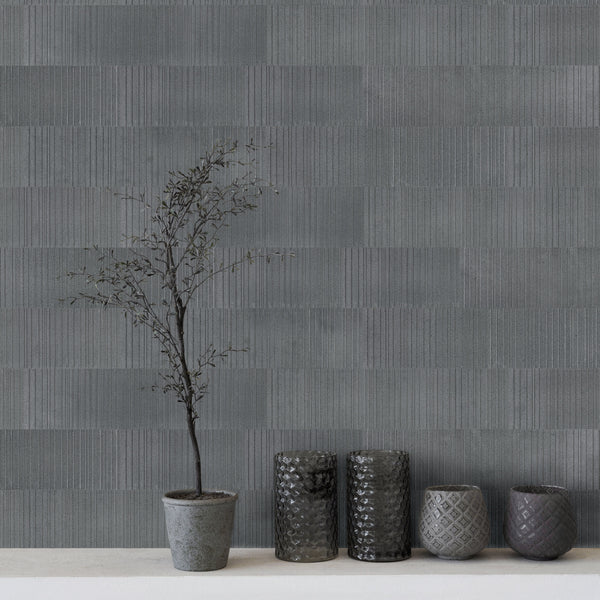
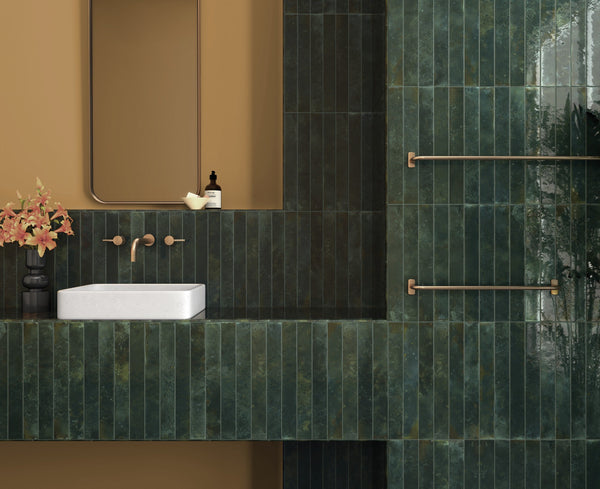
2. Vertical Stack Bond
Tiles stacked directly on top of one another in a perfectly aligned vertical grid. Creates strong vertical lines that draw the eye upward, making ceilings feel taller.
Best for: Low-ceiling rooms, narrow spaces, contemporary bathrooms and kitchens.


3. Horizontal Stack Bond
Tiles stacked horizontally with joints perfectly aligned, creating a clean grid. Strong horizontal lines visually widen the room.
Best for: Wide, open spaces and Scandinavian-inspired designs.

4. 1/3 Offset
Similar to running bond but with each row shifted by one-third of the tile length. Creates a subtle diagonal rhythm. Works especially well with longer formats like 4x12 or 4x16.
Best for: Longer rectangular tile formats and modern kitchens.

Statement Patterns
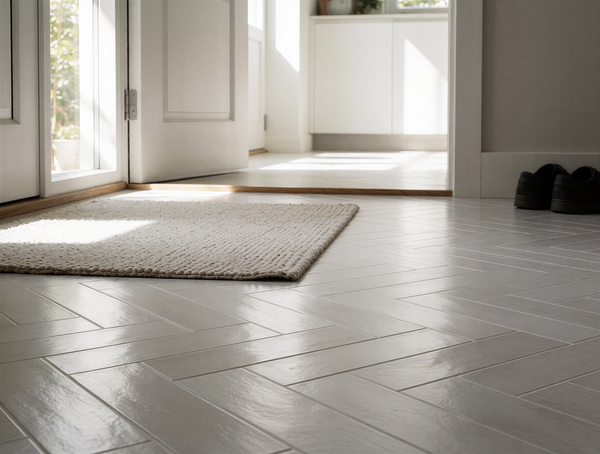
5. Herringbone
Tiles are laid at 90-degree angles in a V-shaped formation, creating a zigzag pattern with strong movement and visual interest. Budget 15-20% extra tile for cuts and waste.
Best for: Feature walls, kitchen backsplashes, shower niches, and entryways.
Grout tip: Dark grout emphasizes the pattern; light grout creates a softer, more cohesive look.
6. Diagonal Herringbone (45 Degrees)
The standard herringbone rotated 45 degrees creates a sharper, more dynamic V-shape. Best reserved for smaller accent areas or professional installation.

7. Chevron
Chevron requires tiles cut at an angle so the ends join at a perfect point, creating a continuous, unbroken V pattern. Requires custom-cut tiles and professional installation.
Best for: Statement kitchen backsplashes and bathroom feature walls.
8. Diagonal (45-Degree Offset)
Standard rectangular tiles rotated 45 degrees and laid in a running bond pattern. Creates a strong diagonal silhouette.
Best for: Kitchen backsplashes, bathroom floors, statement walls.
Mosaic-Influenced Patterns
9. Basketweave
Two horizontal tiles placed side by side, flanked by a vertical tile above and below — alternating across the surface. Creates a classic, vintage character.
Best for: Bathroom floors, niche walls, and transitional kitchens.

10. Pinwheel
A larger square tile surrounded by four smaller rectangular tiles, creating a rotating pinwheel effect.
Best for: Bathroom floors, small accent areas in traditional or eclectic spaces.

11. Windmill
Rectangular tiles arranged in alternating directions around a central square. Creates a clean, geometric rhythm.
Best for: Bathroom floors, mudroom entry floors, traditional kitchens.
Modern and Bold Patterns
12. Hopscotch
Large square tiles alternate with smaller tiles in a hop-and-skip pattern. Requires two different tile sizes.
Best for: Larger bathroom floors, entryways, and open-plan spaces.
13. Elongated Brick with 1/4 Offset
Best for longer tile formats (4x16 or 4x24), this layout offsets rows by one-quarter. Creates subtle diagonal movement across large walls or floors.
Best for: Large-format tiles on bathroom walls, shower surrounds, and kitchen backsplashes.
14. Double Herringbone
Two rows of tiles placed together before changing direction, creating a wider, more substantial herringbone band.
Best for: Large bathroom walls, wide kitchen backsplashes, open-plan feature walls.

15. Mixed Format
Combining tiles of different sizes, for example, 3x6 subway tiles with 2x2 square accents, creates an entirely custom look.
Best for: Custom bathroom designs, transitional kitchens, any space where standard patterns feel too predictable.
Grout Color and Pattern Visibility
Grout color has a significant impact on how prominently a pattern reads. High-contrast grout emphasizes geometric configurations. Matching grout creates a seamless, minimalist look. For herringbone and chevron, a contrasting grout color makes the design stand out.
Shop Subway Tile at Tile Mart
Tile Mart carries a wide selection of subway tiles, including 3x6, 4x12, and 4x16 formats in ceramic and porcelain. Browse backsplash tiles, bathroom tiles, and kitchen tiles to find the right combination for your project.

Frequently Asked Questions
What is the most popular subway tile pattern?
The running bond (1/2 offset) is still the most widely used layout. It is timeless, beginner-friendly, and works in every design style. Herringbone is the most popular choice for statement backsplashes.
Is herringbone harder to install than running bond?
Yes. Herringbone requires precise 45-degree angle cuts at every border and results in 15-20% more tile waste compared to 10% for running bond. It is best suited for experienced installers or professionals.
Which subway tile pattern makes a room look bigger?
Diagonal patterns and herringbone at 45 degrees create movement that makes spaces feel larger. Vertical stack bonds add the illusion of height in rooms with lower ceilings.
What grout color works best with herringbone?
Dark grout emphasizes the pattern boldly. Light or matching grout creates a softer, more unified surface. For most kitchens and bathrooms, a medium gray grout with white tile is the most versatile choice.