



Popular Ways to Shop


Learn more about Farmhouse Tiles
Your Guide to Farmhouse Tiles
Farmhouse tiles are defined by warmth, texture, and a handcrafted quality that feels lived-in rather than polished. The look draws from rural American and European farmhouse architecture: natural materials, matte or low-sheen surfaces, earthy color palettes, and just enough imperfection to feel authentic. Common colors run from creamy whites and soft grays to warm taupes and terracotta.
Farmhouse Floor Tile
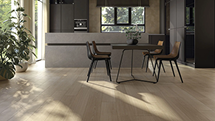
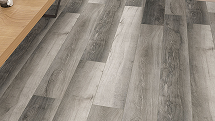
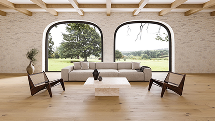
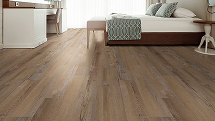
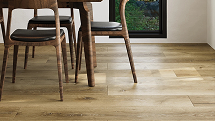
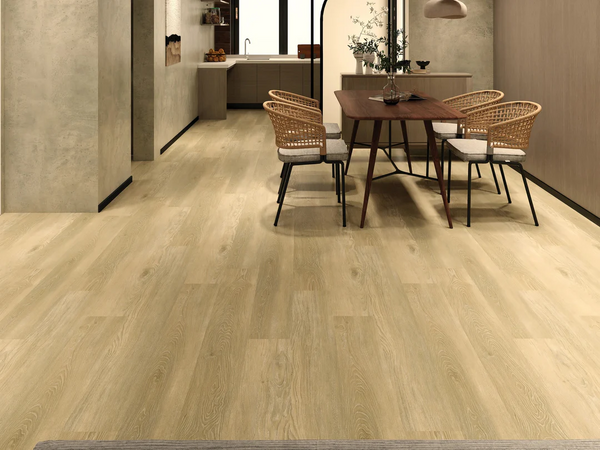
The most popular farmhouse floor tile is the wood-look plank, typically 6x24 or 4x24, laid in a staggered offset or herringbone pattern. These replicate the grain and warmth of reclaimed wood without the maintenance. Most are matte or satin-finished porcelain with a PEI rating of 4 or 5, making them durable in kitchens, mudrooms, and entryways.
Terracotta is a strong second choice. The warm, clay-red color looks unmistakably farmhouse, and the slightly uneven surface adds texture that makes a floor look less like a showroom. Real terracotta requires sealing before grouting and periodic resealing. Porcelain terracotta-look tiles skip that maintenance while keeping the color.
Farmhouse Wall Tile
Subway tile is the defining farmhouse wall tile. A 3x6 white or off-white subway tile in a brick offset looks farmhouse immediately. For more texture, look for handmade-style subway tiles with slightly uneven surfaces and variable glaze thickness. They cost less than artisan handmade versions but deliver a similar handcrafted effect.
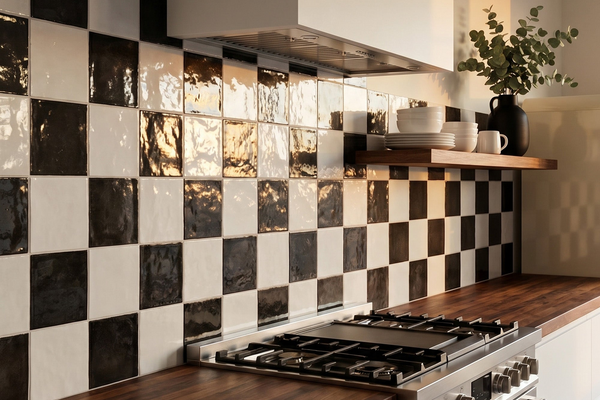
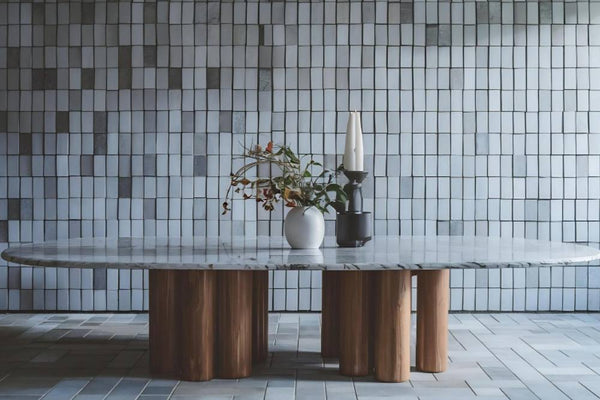
Zellige tile is increasingly popular in farmhouse kitchens and bathrooms. Each zellige piece is hand-formed and individually glazed, so the surface catches light in an irregular, water-like way. In soft neutrals like dove gray, cream, or sage, zellige brings warmth and texture that manufactured tile cannot replicate.
Farmhouse Tile by Room
Bathroom
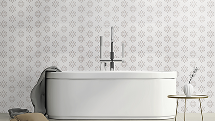
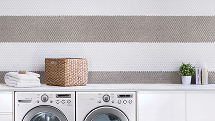
For a farmhouse bathroom, pair a hex or penny mosaic floor with subway tile walls in white or cream. That combination is the most common starting point. For a warmer feel, swap the subway for a zellige or handmade-style ceramic in sage, cream, or warm gray. On the floor, a penny round mosaic in white with gray grout looks clean and classic.
If your bathroom is larger, consider a terracotta or encaustic-style tile on the floor with a simple white wall tile to let the floor be the feature.
Kitchen
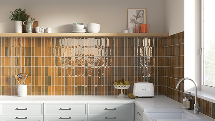
For a farmhouse kitchen, pair a patterned or wood-look floor with a simple backsplash, or a plain floor with a more expressive backsplash tile. A 3x6 or 4x12 subway tile in a vertical stacked pattern is the go-to for kitchen walls. If you want more character, a vertically stacked subway in off-white with dark charcoal grout holds up for years and photographs well. In the kitchen, avoid high-gloss tiles directly behind the stove. Grease shows on polished surfaces.
Shower
For a farmhouse shower, put texture on the walls and keep the floor simple and slip-resistant. Zellige on the shower walls with a small-format matte mosaic on the floor is a combination that appears frequently in farmhouse bathrooms. If you prefer something more restrained, 4x12 or 3x12 shower tile in a stacked vertical pattern on three walls gives you a modern farmhouse look without being fussy. Keep the shower niche tile consistent with the wall. Switching materials in a small recess draws attention to it.
Backsplash
The backsplash is where farmhouse character is easiest to add. Beyond subway, a picket tile, Moroccan fish-scale, or zellige in a short-running bond all work with white or painted farmhouse cabinetry. A contrasting dark grout with white subway, charcoal or warm gray, changes the look dramatically without changing the tile.
How to Choose Farmhouse Tile
Matte beats polished. Farmhouse style calls for a matte or satin finish. A polished surface shifts the look toward contemporary. If a tile comes in both finishes, choose matte for farmhouse applications.
Shade variation is a feature, not a flaw. Tiles with V2 or V3 shade variation (where pieces differ slightly from one another) look more authentic than perfectly uniform tiles. V1 (uniform) looks too manufactured for farmhouse style. V4, where each piece looks distinctly different, works better for rustic applications.
Grout color shapes the whole look. White tile with white grout looks airy and clean. White tile with gray grout emphasizes the grid. White tile with off-white or warm-toned grout softens the installation. For wood-look planks, avoid bright-white grout. It draws the eye to the seams instead of the floor as a whole.
Seal porous tiles before grouting. Real terracotta and cement tile absorb grout and stain easily if you skip this step. Porcelain versions of both materials don't require sealing, which is why most installers recommend them for DIY projects or high-traffic areas.
Match format to room size. A 6x24 wood-look plank works in a large kitchen or mudroom. In a small powder room, the same tile can feel overwhelming. A 4x12 or 4x24 plank scales better. On walls, larger format tiles are easier to clean but harder to cut around fixtures, so plan your layout before ordering.
-
 Concrete Tiles
 -
 Patterned & Decorative Tiles
 -
 Handmade Look Tiles
 -
 Zellige Tiles
 -
 Modern Tiles
 -
 Contemporary Tiles
 -
 Traditional Tiles
 -
 Rustic Tiles
 -
 Industrial Tiles
 -
 Mediterranean Tiles
 -
 Mid-Century Modern Tiles
 -
 Bohemian Tiles
 -
 Coastal Tiles
 -
 Scandinavian Tiles
 -
 Eclectic Tiles
 -
 Art Deco Tiles
 -
 Minimalist Tiles
 -
 Transitional Tiles
 -
 Encaustic Tiles


