



Popular Ways to Shop


Learn more about Traditional Tiles
Your Guide to Traditional Tiles
Traditional tile is defined by pattern and permanence. These are the formats that have furnished well-built homes for over a century: herringbone in marble, penny rounds in white or black and white, basketweave in honed stone, checkered ceramic on diagonal, hex in glazed porcelain. The designs are the appeal. Not a trend, not a moment, but a vocabulary of shapes and arrangements that keep looking right over time.
Whether you are restoring a period home or adding depth to a new build, traditional tile creates interiors with genuine character. The style draws from Victorian geometric floors, Mediterranean encaustic patterns, Talavera-inspired motifs, and the enduring simplicity of a white subway wall.
Traditional Tile Patterns
The pattern is the point with traditional tile. Here are the formats that define the style:
Herringbone. The interlocking V-shape adds movement to a floor or backsplash without competing with the rest of the room. In cream or warm white marble it works on kitchen floors, bathroom floors, and shower walls. A 2x4 ceramic herringbone has a vintage quality; a 4x8 or 4x12 version feels updated while keeping the geometry.
Penny tile. Penny rounds in white are the quintessential traditional bathroom floor. The small circular format provides natural grip from the density of grout lines, which makes it as practical as it is visual in wet areas. Black-and-white penny or a tonal gray blend has a vintage bathroom quality that larger formats cannot replicate.
Hex tile. White hex with a dark grout looks bold at a glance and precise up close. Smaller 1-inch or 2-inch hex delivers a Victorian and Craftsman-era floor feel. Larger 6-inch or 8-inch hex has a more relaxed, artisan character that suits Mediterranean-inspired spaces.
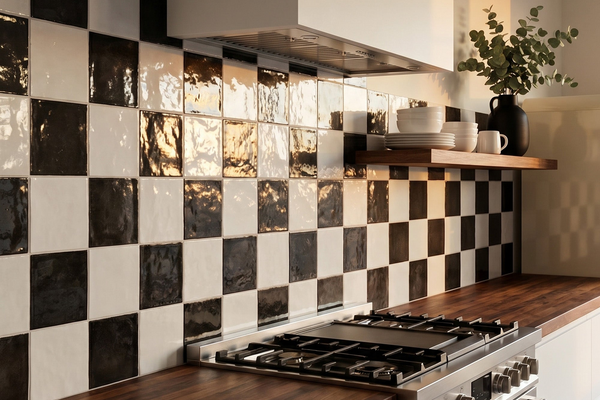
Basketweave and checkered. Basketweave in white and gray marble is a traditional bathroom and entryway staple. The woven geometry looks intricate but uses only two tile shapes. Checkered tile in black and white ceramic is the more graphic option. Diagonal layouts widen a narrow space, and the high contrast suits both formal rooms and casual ones.
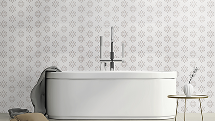
Encaustic patterns. Encaustic-style tiles carry bold geometric or floral patterns set into the tile face. These are the tiles most associated with Mediterranean, Talavera-influenced, and Victorian decorative traditions. They work best as a feature floor, a fireplace surround, or a backsplash where the pattern has room to land at scale.
Traditional Tile by Room
Bathroom. The classic combination is penny or hex on the floor with subway tile on the walls. Use a contrasting grout on the floor to make the pattern stand out, and match the wall grout closely to the tile for a cleaner backdrop. For a richer look, marble basketweave floors with a polished cream wall tile deliver an unmistakably classic bathroom. Explore bathroom tiles for floor and wall combinations.
Kitchen. The classic kitchen backsplash is subway tile in a brick offset, finished with a pencil liner or bullnose cap at the top. For floors, a diagonal checkered pattern in black and white porcelain makes a confident traditional statement. A vintage kitchen tile look also works well with encaustic or Talavera-inspired patterned tile on a single backsplash run behind the range. Browse kitchen tiles for backsplash and floor options.
Fireplace. Traditional fireplace surrounds favor marble with classic border framing, hand-painted encaustic patterns, or decorative mosaics with period detail. A white marble subway surround with a contrasting liner is understated and formal. For more warmth, a patterned cement or Talavera-inspired tile adds color and cultural character to the surround. See fireplace tiles for surround and hearth options.
Entryway. Entryways are where traditional tile makes its strongest impression. A Versailles pattern in travertine-look porcelain, a Victorian geometric grid, or a diagonal checkered floor all signal craftsmanship at the front door. Mediterranean tiles in encaustic-style formats work especially well in entryways with high ceilings and strong natural light.
How to Choose Traditional Tile
Grout color shapes the pattern. Dark grout on white hex or penny tile makes the geometry bold and graphic. Light grout on the same tile gives a softer, more unified result. Settle on the grout effect you want before choosing your tile color, not after.
Scale the format to the room. Penny tile and 1-inch hex can overwhelm a large floor but look perfect in a small bathroom. Larger hex in a 6-inch or 8-inch format suits open floors where a small tile would look busy. Match the tile size to the room, not just the style.
Mix formats within a shared palette. Traditional interiors often pair two tile types in the same room. Hex floor with subway walls is the most common combination because the shapes contrast without competing. Keeping both tiles within the same color family holds the pairing together. Whites and creams, or black and white, are the most reliable combinations.
-
 Concrete Tiles
 -
 Patterned & Decorative Tiles
 -
 Handmade Look Tiles
 -
 Zellige Tiles
 -
 Modern Tiles
 -
 Contemporary Tiles
 -
 Rustic Tiles
 -
 Farmhouse Tiles
 -
 Industrial Tiles
 -
 Mediterranean Tiles
 -
 Mid-Century Modern Tiles
 -
 Bohemian Tiles
 -
 Coastal Tiles
 -
 Scandinavian Tiles
 -
 Eclectic Tiles
 -
 Art Deco Tiles
 -
 Minimalist Tiles
 -
 Transitional Tiles
 -
 Encaustic Tiles


