



Popular Ways to Shop


Learn more about Industrial Tiles
Your Guide to Industrial Tiles
Industrial tiles are defined by raw, unfinished surfaces and a palette drawn from concrete, weathered metal, and reclaimed materials. Charcoal, warm gray, black, and rust characterize the color range. Textures tend to be matte, tactile, and deliberately imperfect: surfaces that look worn by use rather than polished to perfection.
The industrial look overlaps with modern tiles and concrete tiles but has its own character. Where modern tiles tend toward clean geometry and neutral warmth, industrial tiles push further into contrast, rawness, and urban grit. The material references are factory floors, exposed brickwork, and cast iron, not marble or travertine.
Industrial Floor and Wall Tile
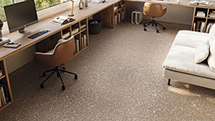
Floor tile. The most effective industrial floor tile is concrete-effect porcelain in a large-format plank or slab. A 24x48 matte gray or charcoal porcelain reads like poured concrete at scale and handles residential traffic without sealing. Look for V3 or V4 shade variation if you want that surface to genuinely mimic worn concrete. V3 tiles show moderate variation from piece to piece; V4 tiles have strong variation that makes the floor read as a single, aged material rather than a grid of identical squares.
Slip resistance is worth checking on any matte porcelain floor tile. Look for a DCOF rating of 0.42 or higher for wet areas. Most textured and matte-finish tiles meet this threshold, but confirm before ordering for a floor application in a bathroom or entryway where water is present. Browse large-format tiles for slab options in the industrial palette.
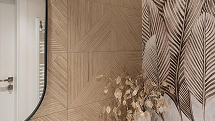
Wall tile. Industrial wall tile favors texture over flatness. Fluted tiles in matte charcoal, dark taupe, or warm gray add vertical depth to a shower surround or feature wall without introducing pattern. 3D textured tiles in a cement or stone relief create a dimensional surface that reads differently under directional light than it does in a product photo.
Subway tiles in dark colorways, including black, slate, and deep navy, fit the industrial register well. A full-field subway wall in matte black with a dark gray grout is one of the cleanest ways to commit to the industrial look without heavy construction.
Industrial Tile by Room
Bathroom. For an industrial bathroom, pair a large-format matte porcelain floor in charcoal or graphite with a fluted or ribbed wall tile in a complementary matte tone. Use a dark grout and a tight joint. On rectified tile, a 1/16" grout joint eliminates visible grid lines and makes the surface read as a continuous material rather than a tiled wall. Matte black fixtures and exposed hardware reinforce the direction without additional tile work.
Kitchen. For an industrial kitchen, a full-field subway tile in black or slate with dark grout on the backsplash is the straightforward approach. If you want more visual impact, carry a large-format concrete-look slab from the countertop up the wall behind the range as a full-height panel. Keep the finish matte to maintain the utilitarian quality that defines the style.
Entryways and Living Areas. Large-format concrete-effect porcelain works well as main living area flooring. A 32x32 or 24x48 matte slab in warm gray sets a neutral industrial base that pairs with metal furniture, reclaimed wood, and leather. Fewer grout joints mean less visual interruption and easier cleaning than smaller-format tile.
How to Choose Industrial Tile
Decide how much variation you want. Concrete-effect porcelain comes in shade variation ratings from V1 (very uniform) to V4 (high variation). V1 and V2 tiles look clean and consistent. V3 and V4 tiles look more like real concrete, with shifts in tone from piece to piece that make the floor read as a single aged material. Neither is wrong, but they produce very different results at scale.
Rectified edges are worth it on large format. Rectified tile is machine-cut to precise dimensions after firing. This allows grout joints as narrow as 1/16", which matters on large-format slabs where a standard 1/8" joint would be visually prominent. Non-rectified tile has natural edge variation that requires a wider joint to prevent lippage.
Match finish to function. Matte and textured finishes work better on floors because they hide scratches and provide more grip when wet. On walls, a satin or lightly polished tile in the same dark palette adds contrast and reflects light in a way that gives the surface depth.
Prep your subfloor before ordering large format. Tiles larger than 15 inches in any direction require a subfloor that is flat to within 3/16" over 10 feet. Concrete slabs with high spots and wood subfloors with deflection need to be addressed before installation. Lippage, where tile edges sit at different heights, is most visible on large matte slabs where there is nothing to distract from it.
-
 Concrete Tiles
 -
 Patterned & Decorative Tiles
 -
 Handmade Look Tiles
 -
 Zellige Tiles
 -
 Modern Tiles
 -
 Contemporary Tiles
 -
 Traditional Tiles
 -
 Rustic Tiles
 -
 Farmhouse Tiles
 -
 Mediterranean Tiles
 -
 Mid-Century Modern Tiles
 -
 Bohemian Tiles
 -
 Coastal Tiles
 -
 Scandinavian Tiles
 -
 Eclectic Tiles
 -
 Art Deco Tiles
 -
 Minimalist Tiles
 -
 Transitional Tiles
 -
 Encaustic Tiles


