


Popular Ways to Shop


Learn more about Mediterranean Tiles
Your Guide to Mediterranean Tiles
Mediterranean tiles are floor and wall tiles that draw from the design traditions of the coastal regions bordering the Mediterranean Sea: Morocco, Spain, Portugal, Turkey, Italy, and Greece. The style is defined by warm earth tones, bold color pairings, and pattern-forward surfaces, the opposite of minimal or neutral. Terracotta, hand-painted ceramic, encaustic cement, and zellige are the materials most closely associated with the look.
Color is central to Mediterranean tile design. Cobalt blue and white are the most iconic pairing, found in Portuguese azulejo panels and Greek island interiors. Terracotta orange and warm ochre anchor Spanish and Italian applications. Geometric patterns, arabesque motifs, and hand-applied glazes give the surfaces a handmade quality that factory-made porcelain does not replicate.
For a purer expression of Moroccan pattern work, zellige tiles and encaustic tiles are the closest sub-categories within this style. For a warmer, more rustic version with less pattern, terracotta tiles cover that range. For cooler tones and a more relaxed feel, coastal tiles pull from the same blue-white palette with less pattern and more texture.
Mediterranean Floor and Wall Tile
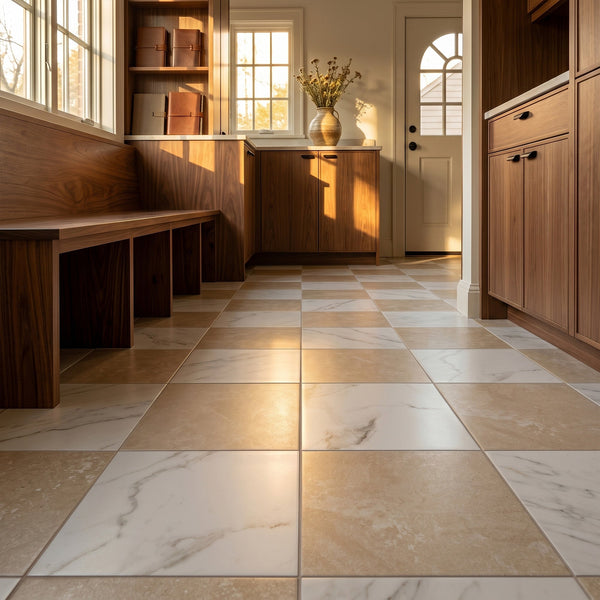
Floor tile: Terracotta is the traditional Mediterranean floor tile material, used in Spanish, Italian, and North African interiors for centuries. Unglazed terracotta in warm orange, red, and sandy beige suits rustic and traditional applications but is porous and requires sealing before and after grouting. Encaustic cement tiles in geometric patterns are another common floor choice, especially in Moroccan-influenced spaces. Both materials are authentic to the style but need more maintenance than porcelain. For a lower-maintenance version of the look, floor tiles in porcelain that mimic terracotta or stone surfaces hold the aesthetic without the upkeep.
Wall and backsplash tile: Hand-painted ceramic is the dominant wall tile in this style. Spanish and Portuguese azulejo-style tiles use a white or cream base with cobalt blue or multi-color painted motifs. Turkish Iznik-inspired tiles feature dense floral patterns on a white ground. These are typically installed as single decorative tiles within a field of plain ceramic, or as full-coverage patterns on a backsplash or niche wall. Zellige and mosaic formats also appear often on shower walls and backsplash runs, where the irregular reflective surface catches light throughout the day.
Mediterranean Tile by Room
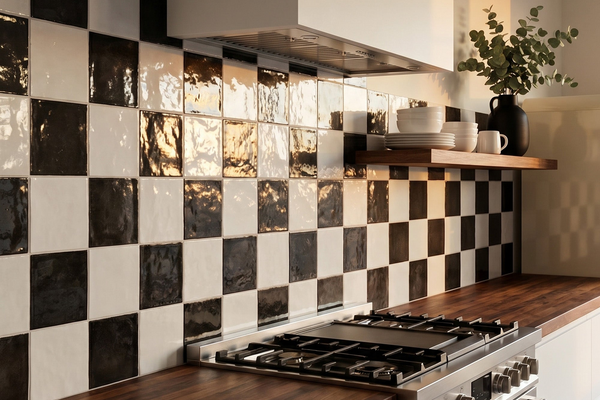
Kitchen backsplash: The backsplash is the most common application for Mediterranean tile in a kitchen. A run of hand-painted ceramic in blue and white above the cooktop is the classic move. Full-height coverage behind open shelving works well for a bolder statement. Pattern density matters here: a highly detailed tile at the backsplash works when the cabinetry is plain; a simpler geometric or solid-color zellige suits kitchens with more visual complexity elsewhere.
Bathroom: In a bathroom, Mediterranean tile typically appears as an accent rather than full coverage. A single decorative tile border at chair-rail height, a patterned niche inset, or a mosaic floor medallion adds the style without overwhelming a small space. For shower floors and wet areas, choose a matte or textured surface over a glossy glaze to maintain grip.
Kitchen floors: Encaustic cement tiles and large terracotta squares suit kitchen floors in homes where the Mediterranean style carries through the whole space. Both materials develop patina over time. If the kitchen gets heavy traffic or you prefer low maintenance, a porcelain tile with a terracotta or stone look delivers a comparable result.
Pool and outdoor: Mediterranean design has a strong outdoor tradition. Cobalt blue glass mosaic and aqua pool tile are the most recognizable expression for pool interiors and surrounds. For patios and courtyards, terracotta and encaustic cement tiles suit the aesthetic, but confirm freeze-thaw ratings for any outdoor tile in colder climates. Not all terracotta is rated for outdoor use in freezing conditions.
How to Choose Mediterranean Tile
Decide how much pattern you want. Highly patterned hand-painted or encaustic tiles work best as a focal point in one area: a backsplash, a niche, a floor medallion. Installing pattern across every surface in a room becomes too busy. A common approach is one patterned surface paired with a plain complementary tile everywhere else.
Understand the maintenance trade-off for authentic materials. Terracotta and encaustic cement are the most authentic materials in this style, but both are porous. They require a penetrating sealer before grouting to prevent stain absorption, and periodic re-sealing over time. Zellige has natural surface variation and is not suited for high-traffic floors. If low maintenance is a priority, look for porcelain tiles in this style instead.
Match the scale of the pattern to the scale of the surface. Small intricate patterns (4-inch hand-painted tiles, 2-inch zellige pieces) suit detail areas like niches, borders, and backsplash runs. Larger geometric patterns work better across full floors and large walls where the repeat can complete itself and the eye can take in the full motif.
Blue and white is not the only Mediterranean palette. The blue-white combination is the most recognized, but Spanish and Italian expressions of this style lean heavily on warm tones: terracotta orange, golden ochre, cream, and olive green. Moroccan-influenced spaces often use deeper jewel tones. Commit to one regional direction before mixing tile families, as blue-white Aegean and warm terracotta Tuscan are two distinct looks in the same room.


