


Popular Ways to Shop


Learn more about Transitional Tiles
Your Guide to Transitional Tiles
Transitional tiles sit between traditional and contemporary design. They borrow the clean lines and restrained palette of modern interiors and pair them with the warmth, layering, and softer finishes of classic ones. The result is a look that feels polished without being cold and comfortable without being overly casual.
Where contemporary tiles tend to lean cool, high contrast, and spare, transitional tiles stay warmer in tone, with softer neutrals, more texture, and formats that carry elegance without a period feel. Common choices include large-format stone-look or concrete-look porcelain, marble-look subway tile in warm white or soft gray, and rectified plank tile in a wood or linen finish.
Transitional Floor and Wall Tile
Floor Tile
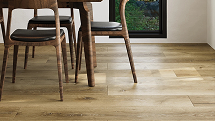
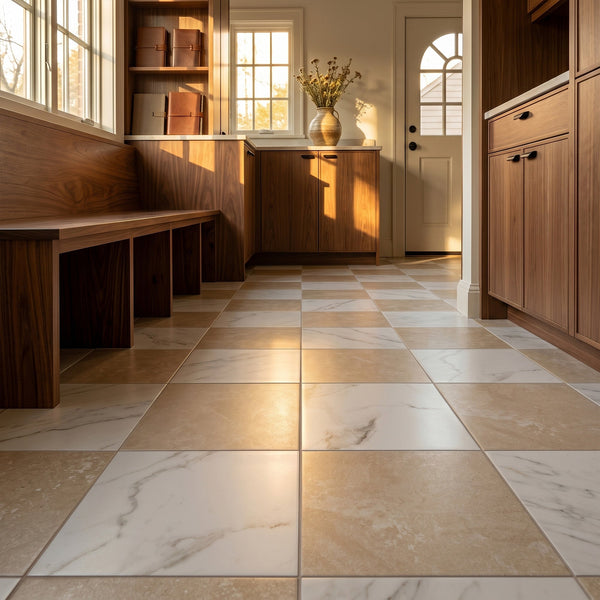
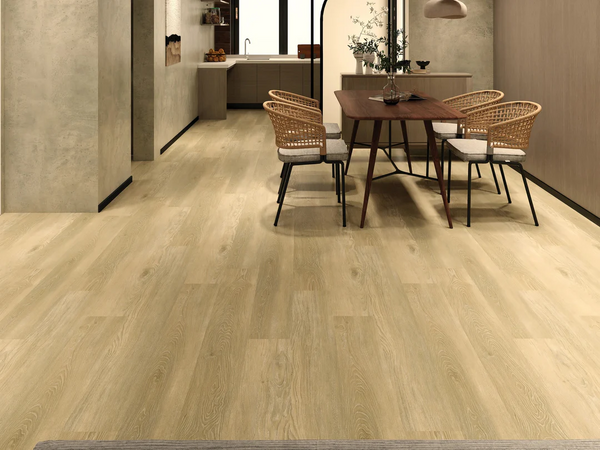
The most common transitional floor is a porcelain tile in a stone, concrete, or subtle wood look, typically 24x24 or 24x48 inches. Rectified edges, meaning the tile is precision-cut to consistent dimensions, let you keep grout joints tight at 1/16 to 1/8 of an inch. Tight joints give the floor the clean, unbroken surface that keeps a transitional space from tipping toward old-fashioned. A matte or lightly textured finish is the standard choice for floor tiles in this style and meets PEI 3 or 4 for residential foot traffic.
Wall Tile
On walls, transitional design allows more sheen. Subway tile in a stacked vertical layout with a polished or satin glaze nods to a classic format while the orientation and finish feel current. For a more seamless look, large-format tiles in 24x48 or 36x36 on a full-height wall reduce grout lines and look quieter at scale. Across both floors and wall tiles, stone-look, marble-look, and concrete-look finishes are the palette that transitional design is built on.
Transitional Tile by Room
Bathroom
For a transitional bathroom, pair a matte stone-look porcelain floor with a polished or satin marble tile on the walls. The contrast between the grounded, slip-resistant floor and the light-catching wall tile creates the balance transitional design is built on: neither too formal nor too spare.
Kitchen
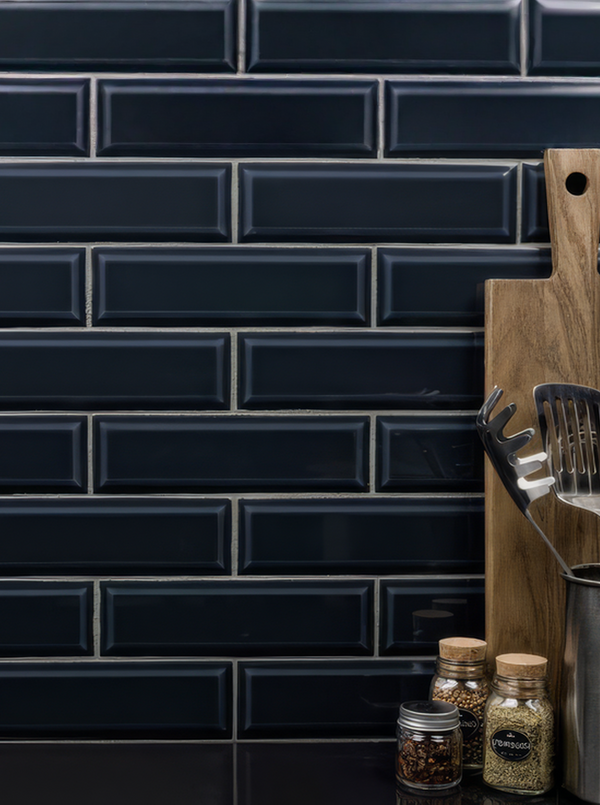
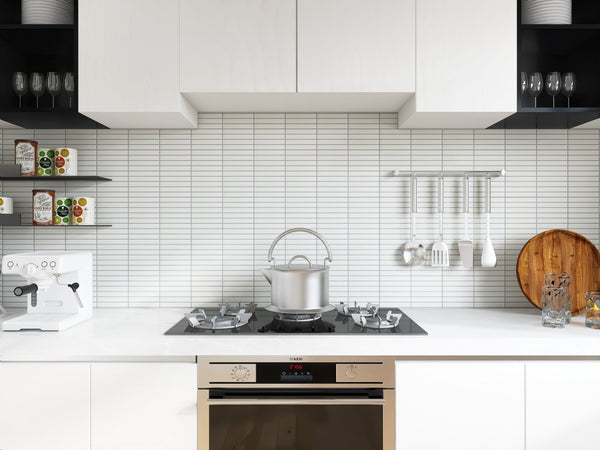
For a transitional kitchen backsplash, a 3x6 subway tile in warm white or soft gray in a standard brick offset works with both traditional cabinet profiles and flat-front modern cabinetry. Behind the range, a large-format slab-look porcelain in a single panel keeps visual noise low and lets the hardware be the focal point.
Shower
For a transitional shower, use a rectified porcelain in 12x24 or 24x24 on both walls and floor. Running the same tile across all four walls and the floor with a 1/16-inch joint and a near-matching grout creates spa-like continuity. A linear mosaic border at shoulder height adds structure without shifting the look toward ornate.
Fireplace
For a transitional fireplace surround, a neutral stone-look or marble-look tile with minimal veining is the right call. A horizontal stacked pattern or a 3x6 herringbone gives the surround quiet structure and stays comfortably within the transitional register.
How to Choose Transitional Tile
Match your finish to the application. Matte and textured finishes resist slipping and hide water spots on floors. Polished or satin finishes add reflected light on vertical surfaces like walls and shower surrounds, where foot traffic is not a concern.
Look for coordinated collections. Many porcelain lines offer the same color in multiple formats: a 24x48 field tile, a 2x2 mosaic for the shower floor, and a 3x6 subway for the backsplash. Using one collection across surfaces eliminates color-matching problems between dye lots.


