
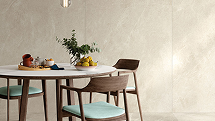



Learn more about Encaustic Tiles
Your Guide to Encaustic Tiles
Encaustic tiles are patterned tiles in which the design is formed by different colors of clay or cement pressed together rather than applied as a surface glaze. The pattern runs through the body of the tile itself, which means it wears gracefully over time rather than fading or chipping. Originally hand-pressed from cement, marble dust, and natural pigments, encaustic tiles have been used in Victorian hallways, Moroccan riads, and Spanish courtyards for centuries. Most encaustic-look tiles available today are made from porcelain, which replicates the same bold geometric and floral patterns with greater durability, lower porosity, and significantly easier maintenance.
The Encaustic Aesthetic
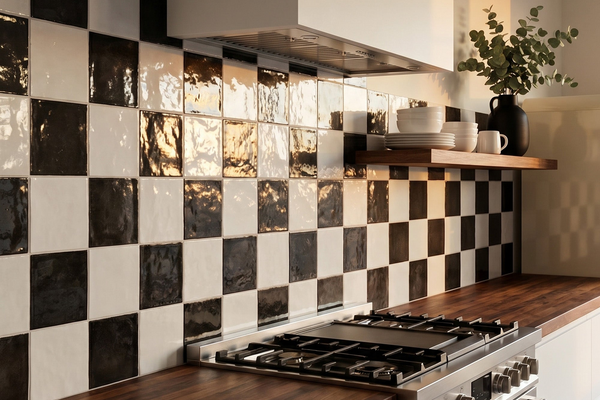
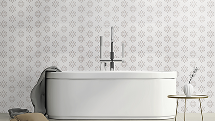
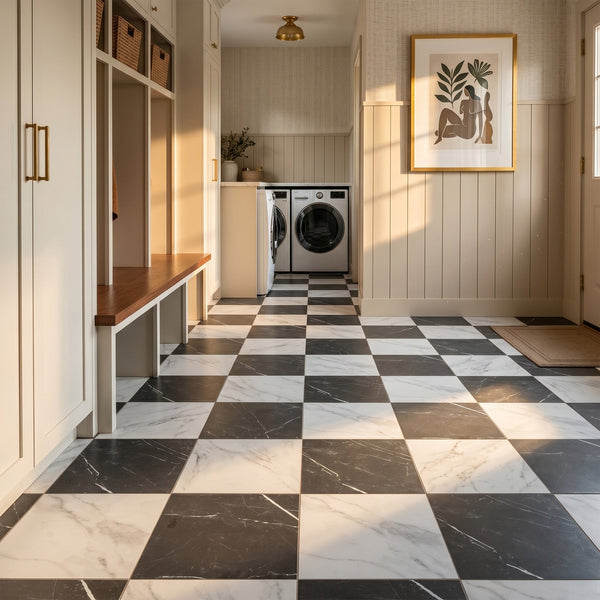
The defining characteristic is pattern. Geometric stars, interlocking diamonds, Moroccan arabesque, floral medallions, and bold checkerboard arrangements are the most recognizable formats. Black and white combinations are the most classic, carrying the Victorian heritage that made encaustic tile famous in English entryways and public buildings. The style also extends into warm terracotta tones, deep cobalt blues, and earthy greens that reflect the Moroccan and Mediterranean craft traditions encaustic draws from. For a similar handcrafted quality with a looser, more organic feel, zellige tiles and terracotta tiles share the same craft heritage.
Where to Use Encaustic Tile
Entryways and hallways: This is the original application. A patterned encaustic floor tile in a narrow hallway creates immediate visual impact and sets the tone for the rest of the home. The contained scale makes it an ideal first encaustic project.
Kitchen backsplash: A full-height encaustic backsplash behind a range or across a kitchen wall is one of the most popular modern applications. The pattern reads best when surrounding cabinetry and countertops are kept neutral.
Bathroom floors and feature walls: Small-format encaustic tile on a bathroom floor brings historical character without overwhelming the space. A single patterned wall behind a vanity or in a shower niche works the same way at a smaller commitment.
Decorative accents: Encaustic tile used as a border, a fireplace surround, or a stair riser insert brings pattern to spaces where a full-floor installation would be too much. This is a strong approach for anyone testing the style before committing.
Outdoor spaces: Porcelain encaustic-look tiles are suitable for covered patios and sheltered entryways where they're protected from direct weather exposure.
Cement vs. Porcelain Encaustic
Traditional cement encaustic tiles require sealing on installation and resealing every one to two years. They are sensitive to acids, moisture, and abrasive cleaning products. Porcelain encaustic-look tiles deliver the same visual depth with none of those requirements: non-porous, easy to clean, and highly durable underfoot. For high-traffic floors, wet bathrooms, or anyone who doesn't want an ongoing maintenance routine, porcelain is the practical choice. For restored Victorian properties or projects where material authenticity is the priority, traditional cement tiles remain the standard.
-
 Concrete Tiles
 -
 Decorative Tiles
 -
 Zellige Tiles
 -
 Modern Tiles
 -
 Contemporary Tiles
 -
 Traditional Tiles
 -
 Rustic Tiles
 -
 Farmhouse Tiles
 -
 Industrial Tiles
 -
 Mediterranean Tiles
 -
 Mid-Century Modern Tiles
 -
 Bohemian Tiles
 -
 Coastal Tiles
 -
 Scandinavian Tiles
 -
 Eclectic Tiles
 -
 Art Deco Tiles
 -
 Minimalist Tiles
 -
 Transitional Tiles


