





Learn more about Fluted Tiles
Your Guide to Fluted Tiles
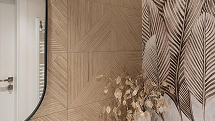
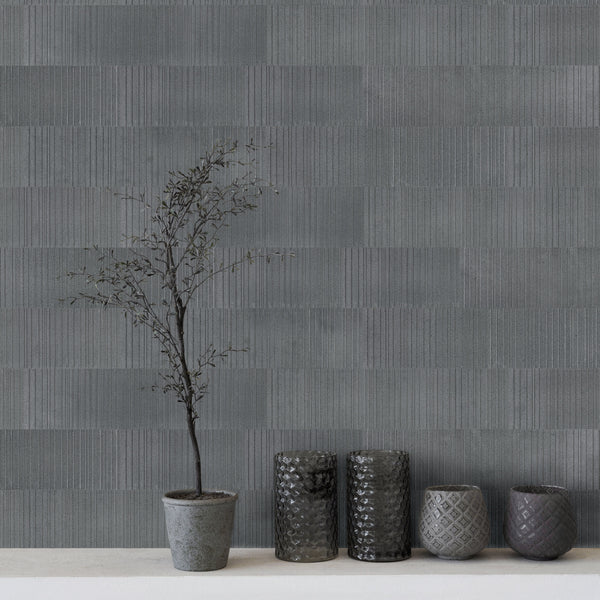
Fluted tiles have a ribbed surface: parallel grooves run the length of each tile and create shadow lines that shift as light moves across the room. Also called reeded tile, the format turns a flat wall tile surface into something sculptural without adding pattern in the traditional sense. The texture is architectural rather than decorative, which is why fluted tile works in contemporary spaces as easily as it does in more classic rooms.
Fluted tile is a wall-application format. The grooves that create the effect on a vertical surface cause footing and cleaning problems underfoot, so it is not used on floors. If you want dimensional texture on both surfaces, 3D textured tiles are designed for floors and walls.
Fluted Tile by Room
Bathroom
For a bathroom feature wall, fluted tile behind the vanity or a freestanding tub is the most common application. Run the flutes vertically to draw the eye upward and make the room feel taller, or horizontally to visually widen a narrow space. A matte white or off-white ribbed tile gives the wall depth and movement without introducing color or pattern.
Shower
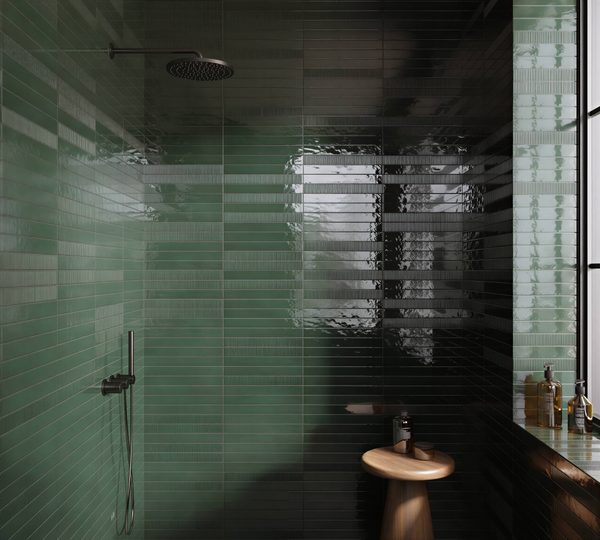
For a shower accent, fluted tile works best as a single feature wall rather than wrapping all four walls. One ribbed panel behind the showerhead contrasts with flat tile on the remaining walls and stays more manageable to clean. Keep grout color close to the tile color so grout lines disappear into the shadow lines of the fluting.
Kitchen Backsplash
For a kitchen backsplash, a full-height panel of vertical fluted tile behind the range looks intentional at scale. A single row of horizontal reeded tile as an accent band above a standard backsplash keeps the approach more restrained and works well when the rest of the kitchen is already busy.
Fireplace
For a fireplace surround, a floor-to-mantel panel of vertical fluted tile in a neutral porcelain or ceramic adds quiet texture without ornamentation. It works especially well in modern and transitional rooms where the fireplace needs to anchor the space but not compete with it.
How to Choose Fluted Tile
Orientation changes the effect. Vertical flutes add height and look more contemporary. Horizontal flutes widen a space and carry a slightly softer, more mid-century feel. Decide on orientation before you order, since some fluted tiles are not square and cannot be rotated.
Porcelain for wet areas, ceramic for dry. Porcelain is non-porous and handles moisture in showers and wet walls without sealing. Ceramic fluted tile is a good option for kitchen backsplashes and dry feature walls where budget matters more than moisture resistance.
Light colors amplify the shadow play. White, cream, and soft gray fluted tiles cast the strongest shadow lines because the grooves show clearly against a pale field. Deep colors reduce contrast and flatten the ribbed effect.
Plan for regular cleaning in wet areas. The grooves that create the look also collect soap residue faster than flat tile. A narrow grout brush used weekly keeps shower walls and backsplash installations looking sharp.


