





Learn more about Pebble Tiles
Your Guide to Pebble Tiles
Pebble tiles are small, smooth stones mounted on a mesh backing. Each tile arrives as a 12x12 sheet, and the individual pebbles are set close together so the installed surface looks like a continuous bed of natural stone. The finish is organic and textured rather than flat and uniform, which makes pebble tile a different visual choice from standard ceramic or porcelain.
The stones are natural materials, mostly marble and river rock, and they come in a range of colors from white and cream to gray, brown, and near-black. Most pebble tiles are sold with a natural or lightly polished finish that keeps the surface looking close to how the stone looks in nature. Browse the full natural stone tiles collection to see how pebble tiles compare to other stone formats.
Where Pebble Tiles Work Best
Pebble tiles are mesh-mounted mosaics, which means they install the same way as any mosaic sheet. The grout fills the gaps between individual stones and locks everything in place. Because the stones are uneven in height, pebble tiles are best suited to walls and shower floors rather than high-traffic walking surfaces where a level footing matters more.
Shower floors are the most common application. The texture provides natural grip underfoot without a separate slip-resistant treatment, and the grout joints drain water efficiently. Use a non-sanded or epoxy grout in a color close to the stone to keep the surface looking clean.
Shower walls work well with pebble tile when the goal is a spa-like wet room where the same material runs floor to wall. Keep the pebble tile below the waterline and use a large-format or slab tile above for a cleaner upper wall that is easier to maintain.
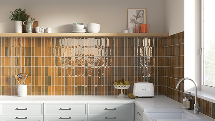
Backsplashes are a lower-stakes way to introduce pebble tile into a space. A short run behind a kitchen sink or bar area brings in natural texture without the installation complexity of a full wet area.
Fireplace surrounds are another strong fit. The organic texture of pebble tile reads well against the rougher materials typically used in fireplace design, and there is no moisture concern on a dry vertical surface.
Pebble Tile by Room
Bathroom
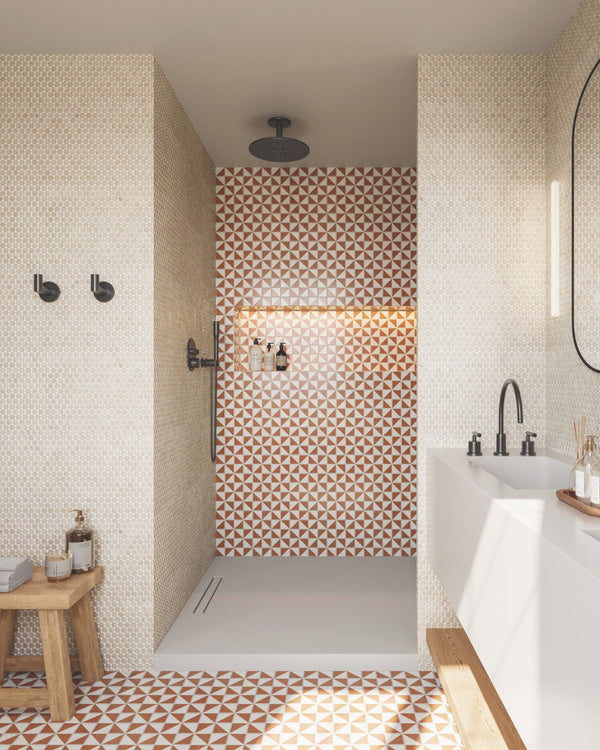
In a bathroom, pebble tile works best as an accent rather than a primary surface. A pebble floor inside the shower paired with a large-format tile on the walls gives the room a clear material hierarchy. The pebble adds texture where you want it — underfoot — without making the walls busy.
Shower
The shower floor is where pebble tile performs best. The stones provide grip, the grout joints drain water, and the natural variation in stone color holds up visually even when wet. Use rectified large-format tile on the walls to keep the installation simple and the grout lines minimal. If you want pebble tile on the walls as well, limit it to the lower half or a single accent band.
Pool and Outdoor
Pebble tiles rated for wet and exterior use are a good fit for pool surrounds and outdoor showers. The same grip and drainage properties that make them useful in a shower apply outdoors. Confirm the tile is rated for exterior use and frost resistance if you are in a climate with freezing temperatures. Browse pool tiles for options rated for wet outdoor use.
Fireplace
On a fireplace surround, pebble tile adds natural texture to what is often a flat, featureless wall. It installs the same way as on any dry vertical surface. Choose a stone color that works with your mortar and mantel material, and keep the grout color close to the stone so the surface reads as one continuous texture rather than individual pieces.
How to Choose Pebble Tile
Match the stone finish to the space. A natural or tumbled finish looks more organic and hides water spots better than a polished finish. Polished pebble tiles reflect more light and work well on dry walls and fireplace surrounds, but they can feel slippery underfoot in a wet area.
Choose a grout color close to the stone. Pebble tiles have a lot of grout joints, more than almost any other tile format. A contrasting grout color will make every joint visible. Match the grout to the dominant tone of the stone to keep the surface looking like a unified material.
Use unsanded or epoxy grout in wet areas. The gaps between pebble stones are often under 1/8 inch, which calls for unsanded grout. In a shower floor or other wet area, epoxy grout resists staining and mildew better than cement-based grout.
Plan for more grout than you expect. Because pebble tiles have narrow, irregular gaps across the whole sheet, they consume significantly more grout per square foot than large-format tile. Add 20 to 30 percent to your grout estimate.
Order samples. Stone color varies between lots, and the same pebble tile will look different dry versus wet. A physical sample in your shower or bathroom under your lighting conditions is the most reliable way to confirm the color works before you order full quantities.
Browse floor tiles, wall tiles, and backsplash tiles if you want to compare pebble tile against other formats for the same application.


