


Popular Ways to Shop


Learn more about Bohemian Tiles
Your Guide to Bohemian Tile
Bohemian tile is defined by pattern, color, and handmade character. Where most tile styles prioritize uniformity and restraint, boho tile leans into variation: encaustic patterns in two or three colors, geometric repeats in earthy tones, zellige-style surfaces with natural glaze variation, and decorative ceramics that look like they were made by hand. The result is a surface that has personality and warmth rather than a clean, polished finish.
The style draws from Mediterranean and North African tile traditions, where bold geometric patterns on small-format tile have been used for centuries in kitchens, bathrooms, and courtyards. Encaustic tiles and zellige tiles are the two formats most associated with this look. Both are available in porcelain and ceramic versions that are easier to maintain than traditional handmade originals. For a broader range of pattern-forward options, browse Mediterranean tiles and eclectic tiles.
Bohemian Floor Tile and Wall Tile
Floor Tile
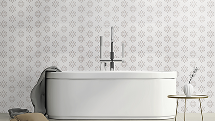
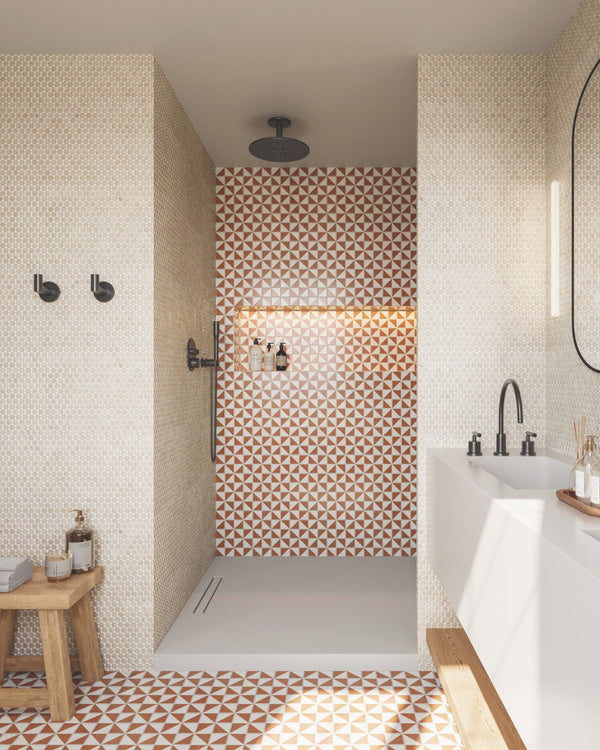
Bohemian floor tile works best in small and medium-sized rooms where a bold pattern can cover the whole surface without overwhelming the space. An encaustic tile in a two-color geometric repeat on a bathroom or entryway floor is the most common application. Sizes in the 4x4, 6x6, or 8x8 range install well in these spaces and give the pattern enough scale to read clearly. A grout color that matches one of the tile colors keeps the pattern tight and intentional. Browse floor tiles for the full range of formats.
Wall Tile
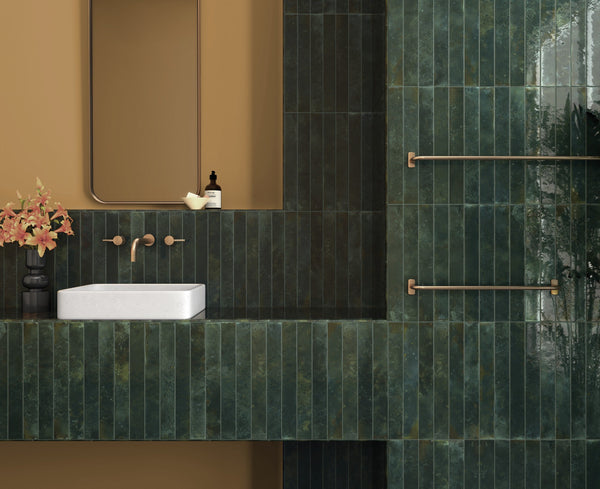
On walls, boho tile is well suited to backsplashes, bathroom walls, and fireplace surrounds where a pattern can cover a defined area rather than an entire room. A zellige-style ceramic in a warm blue or green on a kitchen wall, or a small decorative mosaic in a multicolor geometric pattern in a shower, both work without needing to cover a large area. Browse wall tiles for decorative and pattern-forward options in ceramic and porcelain.
Bohemian Tile by Room
Bathroom
In a bathroom, bohemian tile works well as a floor treatment paired with a simple, solid-color wall tile. A 4x4 or 6x6 encaustic pattern on the floor with white or cream subway tile on the walls keeps the room from feeling too busy while still letting the pattern be the focal point. For a bolder approach, use a zellige-style tile in a single color on all four walls. The natural glaze variation in zellige adds texture and warmth without introducing a competing pattern.
Kitchen Backsplash
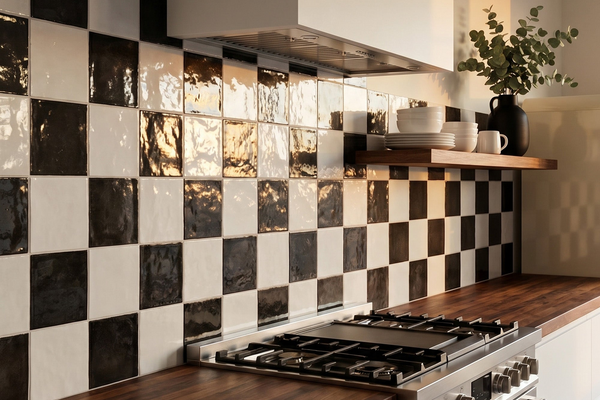
A kitchen backsplash is one of the best places to use boho tile because the area is contained and visible. A handmade-look ceramic in a warm color, a small encaustic pattern in two complementary tones, or a decorative mosaic in a geometric repeat all work well in this format. Keep the countertop and cabinetry in a solid neutral so the tile pattern stands out. Browse backsplash tiles for pattern-forward options suited to kitchen use.
Entryway
An entryway floor is a natural fit for bohemian tile. It covers a small, bounded area and is one of the first things you see when you enter a space. A bold encaustic or geometric pattern here works even in homes where the rest of the interior is more restrained, because it reads as a deliberate welcome rather than an all-over style commitment.
How to Choose Bohemian Tile
Pick one pattern surface per room. Bohemian style can involve multiple patterns in a space, but in tile, it is easier to manage one patterned surface against plain surroundings. A patterned floor with solid walls, or a patterned backsplash with plain countertops, gives the tile room to read without competing.
Match grout to one of the tile colors. Encaustic and geometric tiles already have a lot going on visually. A grout color that matches one of the tile colors reduces the visual noise and keeps the pattern reading as a single cohesive surface.
Consider the room size. A bold encaustic or geometric pattern in a small room creates a strong effect. In a very large room, the same tile can feel busy across a wide floor area. For larger spaces, a simpler zellige-style tile in a single color with natural glaze variation gives warmth and texture without a repeating geometric pattern.
Check the finish for the application. Most bohemian tile is ceramic or porcelain in a matte or semi-gloss finish. For floors in wet areas, confirm the tile has a slip-resistance rating suitable for the application. For walls and backsplashes, finish choice is primarily aesthetic.
Order samples before you commit. Pattern tiles look different at full installation scale than as a single tile. Order three to five samples to see how the pattern looks when tiles are laid side by side. Order samples here.
-
 Concrete Tiles
 -
 Patterned & Decorative Tiles
 -
 Handmade Look Tiles
 -
 Zellige Tiles
 -
 Modern Tiles
 -
 Contemporary Tiles
 -
 Traditional Tiles
 -
 Rustic Tiles
 -
 Farmhouse Tiles
 -
 Industrial Tiles
 -
 Mediterranean Tiles
 -
 Mid-Century Modern Tiles
 -
 Coastal Tiles
 -
 Scandinavian Tiles
 -
 Eclectic Tiles
 -
 Art Deco Tiles
 -
 Minimalist Tiles
 -
 Transitional Tiles
 -
 Encaustic Tiles


