




Education

Quick Summary: Tile variation ratings, ranging from V0 (very uniform) to V4 (substantial, random variation), are aesthetic classifications established under ANSI A137.1 to declare how much a tile's color, tone, and pattern will vary within a single series. Higher variation is an intentional design feature, not a quality defect or a measure of physical durability. To ensure a balanced layout, order the full tile quantity at once from a single shade lot, order multiple samples to view the full range of tones, and always dry-lay and blend tiles from several boxes before installing.
You opened the boxes, and the tiles don't match. One is lighter, one has more movement, and a couple look like they came from a different series entirely. Before you call it a defect, find the V rating on the spec sheet.
That code is the manufacturer's declaration of how different the pieces are supposed to be. V1, V2, V3, and V4 tile ratings describe variation that was designed in, which means a V3 or V4 series arriving unevenly is doing exactly what it was made to do. The range is the product.
Here's where the scale comes from, what each class looks like on one tile versus across a finished floor, and how to lay out a high-variation order so the field reads evenly.
Q: What Are V1, V2, V3, And V4 Tile Ratings?
V ratings are aesthetic classes defined in ANSI A137.1 and assigned by the manufacturer to declare how much tiles in a series will differ in color and texture. The current edition defines five classes: V0 is very uniform, V1 is uniform, V2 is slightly variable, V3 is moderately variable, and V4 is substantially variable. The scale describes appearance only, not durability, wear, or slip resistance.

Is Tile Shade Variation A Defect?
No, as long as the variation falls within the class the manufacturer declared. V ratings are aesthetic classifications defining expected ranges of tile color consistency, per ANSI A137.1 standards. If a V3 or V4 series arrives with visible shifts, it is performing exactly as designed. A defect only occurs if the tile's variation exceeds its declared class range.
If you suspect a quality issue, pull up the spec sheet for the series you bought and find the V rating. Two situations do warrant a call: if a V1 series shows obvious shifts between pieces, or if what arrived doesn't resemble its class description at all. In that case, lay several tiles side by side, photograph them in daylight, and send the photos to our team to check against the manufacturer's documentation. Don't set, cut, or reorder until someone has looked.
Where Does The V Scale Come From?
The classes are defined in ANSI A137.1, the American National Standard Specifications for Ceramic Tile, developed and published by the Tile Council of North America, the ANSI-accredited body responsible for the standard. They're aesthetic classes: the manufacturer assigns one to each series to indicate the range of colors and textures you should expect. The scale covers porcelain, ceramic, handmade, and stone-look tile.
Two details get dropped from most charts. The current edition includes V0, so there are five classes rather than four, V0 being the most uniform. And the rating covers appearance only, not durability, wear, water absorption, or slip resistance, which are separate tests with separate numbers. A V4 tile is not a lower grade than a V1. It's a tile whose faces were designed to differ.
Natural stone sits outside the system, meaning they won't have a V-rating: marble, travertine, and slate vary because they were quarried rather than printed. Stone-look porcelain series usually publish a V rating for the same effect.
What Do V1, V2, V3, And V4 Tile Ratings Look Like In Practice?
V1, V2, V3, and V4 tile ratings indicate how far apart two pieces from the same series can appear. Each class describes two things at once: what one piece looks like in your hand, and what the whole field looks like once it's down. At the high end, those views disagree sharply.
| Class | ANSI Description | Single Piece Appearance | Full Floor Result (The Why) |
|---|---|---|---|
| V0 | Very uniform. Pieces of the same shade are very uniform and have a smooth texture. | Matches the product photo closely. | One continuous color. Layout and grout become the only visual interest. |
| V1 | Uniform. Differences among pieces from the same production run are minimal. | Nearly identical to the next piece. | Flat, even field. A single odd tile would stand out. |
| V2 | Slight variation. Clearly distinguishable differences in texture or pattern within similar colors. | Same color family as its neighbors, different figure. | Gentle movement, no patches. |
| V3 | Moderate variation. The colors and textures on any one piece indicate what's on the others, but the amount on each piece can vary significantly. | May read darker or busier than you expected. | A coherent field with visible rhythm, if you blended it. |
| V4 | Substantial, random variation. One tile can look dramatically different from the next. This is intentional. | Can look wrong on its own. | Either patchwork or the effect you bought, depending entirely on how you distributed the pieces. |
That last column is what a product photo can't teach you. A V4 piece held up alone often looks like a mistake. Put forty down with the extremes spread out, and the same tiles read as one surface with depth. Order several samples of a high-variation series rather than one. Judging it one tile at a time is how people talk themselves out of the product they want.
Why Can't One Sample Represent A V3 Or V4 Series?
One sample is one draw from a wide range. Whatever arrives is a genuine piece of the series and still tells you nothing about either end. Order several pieces of a V3 or V4 product through the Tile Mart sample program, then set them next to your cabinet door, countertop, or paint sample in the room's own light.
Screens make it harder. Color and texture shift between monitors and phones, and a photo of a variable tile has already flattened what you're trying to judge. If you're comparing two series, our team can tell you how many pieces of each are needed to show the range.
How Do You Dry-Lay And Blend A High-Variation Order?
Dry-laying means setting the tile out loose, without mortar, to check the distribution before anything is permanent. On a V3 or V4 floor, it's the step that decides whether the result looks intentional. Follow these steps:
- Inspect: Open several boxes at once, as many as the room lets you, and pull from all of them as you work instead of emptying one and moving to the next.
- Dry-Lay: Lay out the full field, or as much of the room as you can, before anything gets set.
- Evaluate: Photograph the layout on your phone. A photo flattens color the way your eye won't, and patches jump out. Move the darkest and busiest pieces away from each other.
- Install: Keep pulling from a mixed stack as you set. Set box by box, and you get visible blocks of light and dark. Tell your installer the rating before the job starts. A V4 layout takes real time and shouldn't be a surprise on install day, which is one reason a Certified Tile Installer is worth the search on a high-variation job.
What Are Shade Lots, And Why Can A Reorder Look Different?
Tile gets produced in runs, and each run is its own shade lot, which some manufacturers call a dye lot. Two boxes of the same SKU from different runs can differ in color, in addition to the variation already built into the series. Caliber, the standard term for allowable dimensional variation, can also shift between runs, changing how your grout joints line up. Both terms are in the Tile & Stone Glossary.
So order the whole job at once: field tile, cuts, overage, and attic stock (spare tile held back for future repairs). For help sizing the order, see how to calculate tile quantity and overage.

Which V Rating Fits The Room You're Tiling?
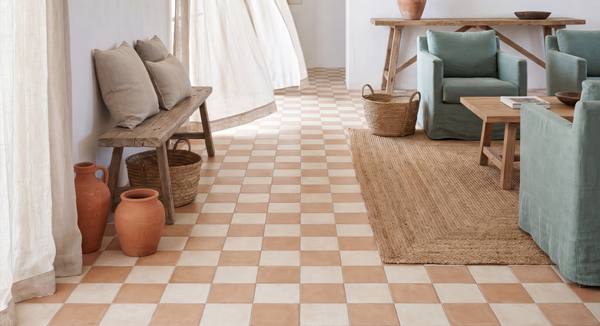
Pick the class that matches the look you want and the patience you have, not the one that promises consistency. For a floor that reads as a single flat color, stay at V0 or V1 and let the layout and grout carry the interest. Handmade terracotta and natural stone look like what they are because the variation is high. Choosing V3 or V4 means choosing a longer layout day.
What's left is how you handle the boxes. Check the V rating on the spec sheet before you order, order enough samples to see the range, and buy the full quantity at once so the job comes from a single lot.
Projects slip, and the 365-day return period is built for a timeline that moves, not a fixed install date. If your order has arrived and something looks wrong, photograph several tiles side by side in daylight and send it to support before you pull a single piece.

Frequently Asked Questions About Tile Shade Variation Ratings
Is tile shade variation considered a manufacturing defect?
No, as long as the variation falls within the declared V rating on the spec sheet. Higher ratings like V3 and V4 are engineered specifically to produce visible shifts in tone, pattern, and texture. A defect only occurs if a tile shows obvious flaws outside its declared range or if a uniform V0 or V1 series arrives with noticeable, uncharacteristic shade differences.
Why doesn't my delivered tile match the single sample I ordered?
A single sample represents only one piece from a broad range of variation. On a V3 or V4 series, individual tiles from the same box can look noticeably different in tone or pattern, and both are correct. For high-variation tiles, order multiple samples to view the full spectrum of color and texture before placing your full order.
Does a V4 rating mean the tile is lower quality or less durable?
No. V ratings describe visual appearance only, per ANSI A137.1 standards. They do not reflect tile hardness, breaking strength, water absorption, or slip resistance. A V4 tile is engineered to the same physical manufacturing standards as a V1 tile.
Can I install tile from two different orders or dye lots together?
Yes, but you must blend the boxes together during installation. Mix pieces from both orders across the entire floor rather than installing one batch in one area and starting the second batch elsewhere. If there is a dramatic color shift between dye lots, contact live support before cutting or setting the tile.
What is the difference between tile shade variation (V rating) and shade lot (dye lot)?
A V rating is an intentional design specification that defines how much variation is engineered into a tile series. A shade lot (or dye lot) refers to natural, minor color variations that occur between different manufacturing production runs. Even a uniform V1 tile can have subtle shade differences if boxes are purchased from two separate production runs.
Which V rating is best for hiding dirt and wear in high-traffic areas?
Tiles with moderate to substantial variation (V3 and V4) are naturally better at disguising everyday dirt, foot traffic haze, and minor wear. Because the surface already features shifting tones and visual movement, small specks of outdoor grit or dust are much less noticeable on a V3 or V4 floor than on a solid, uniform V0 or V1 surface.
How do I communicate V3 or V4 layout expectations to my tile installer?
Before work begins, show your installer the product spec sheet and confirm the V rating. Instruct them to open multiple boxes simultaneously and pull tiles from a mixed stack rather than working box by box. Requesting a loose dry-lay of a portion of the room allows you both to review and approve the tonal balance before any mortar is applied.
Eliminate Surprises on Delivery Day
A V3 or V4 rating means variance is built into the design, but holding physical pieces in hand is the best way to verify if that range fits your vision.
Ordering several samples ahead of time lets you confirm the color spectrum and get installer approval before placing your full order. Order your sample tile today.