





Education

Quick Summary: Choosing a grout color involves balancing visual design with long-term maintenance. Matching your grout to your tile creates a seamless, continuous field that hides minor installation imperfections and lippage, making it ideal for high-variation materials or busy spaces. Contrasting grout highlights geometric patterns such as herringbone or stack bond, but it requires precise installation and reveals every joint line. On high-traffic floors, mid-tones and colors pulled directly from the tile are usually best, as light grout lines tend to collect traffic soil over time. Before finalizing your order, mix a small test batch of grout and view it cured next to your tile under your room's actual lighting.
You've picked your tile. Installation is on Thursday. Now someone has handed you a color chart under fluorescent light and asked you to choose a grout.
Here's the part most guides skip: choosing grout color is as much a maintenance question as a design one. Matching grout makes the tile and the joints read as one surface, and it forgives slightly uneven work. Contrast turns the layout into a feature, and it puts every alignment error on display. Both are correct answers. They just commit you to different things.
This article covers what each choice commits you to, why floors and walls age differently, how joint width and grout type change the answer, and how to test a color before it cures.
Q: Should Grout Match Or Contrast With Your Tile?
Match your grout to your tile when you want the surface to read as one plane, when the tile has high color variation, or when the installation may have slightly uneven joints, because matching hides them. Contrast when the layout is the design, like herringbone or vertical stack. On floors, factor in upkeep: light grout underfoot shows traffic soil first.
How To Choose Grout Color: Match Or Contrast?
Match when you want one continuous surface. Contrast when the layout is the design. Everything after this is about which one your room can carry.
Matching grout means a color pulled from the tile itself, or close to it. It makes the tile and the joints read as one plane. The eye sees a field, not a grid. That's the choice for tile with heavy color variation, for small rooms where a grid would read busier, and for installs where the layout isn't the point.
Matching also forgives. Slightly uneven joint spacing and minor lippage, meaning one tile edge sitting a hair higher than its neighbor, are much harder to see when the grout isn't outlining them.
Contrast does the opposite. It draws the joint, which means it draws the pattern. Herringbone, chevron, picket, vertical stack: if you chose a subway tile layout pattern because of how it looks, contrast is what makes it visible.
It also raises the bar on the installation. Every crooked line and inconsistent joint width becomes part of the design, whether you want it there or not. Worth knowing before you pick charcoal grout for your first tiling project.
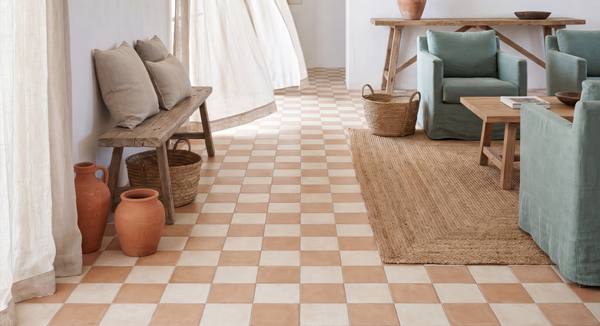
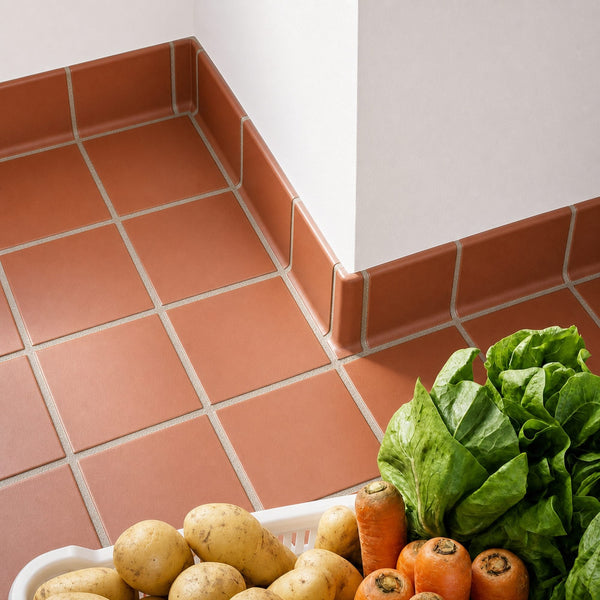
Some tile have high natural variation: handmade tile, variegated stone, and terracotta, which shifts tone from piece to piece. For those, pull the grout color from a tone already present in the tile rather than fighting it. Our guide to grout colors for terracotta tile walks through how that works on one material.
Matching vs. Contrasting Grout
| Matching grout | Contrasting grout | |
|---|---|---|
| Visual effect | Tile and joint read as one plane; you see a field | Joint lines define the layout; the pattern becomes the feature |
| Installation imperfections | Hides uneven spacing and minor lippage | Reveals them |
| Upkeep | Less visible change as the joint discolors, because there's less color difference to lose | Direction matters: dark grout under light tile hides soil; light grout against dark tile shows it |
| How it ages | Darkening reads as gradual and stays consistent with the tile | Stays sharp while the color holds; looks worn sooner once it shifts |
Order samples before you commit to a direction. A matched grout only works if you know which tones are in your tile, and a screen won't tell you that.

How Does Grout Color Age On Floors Versus Walls?
Where the tile sits decides whether you're happy in three years.
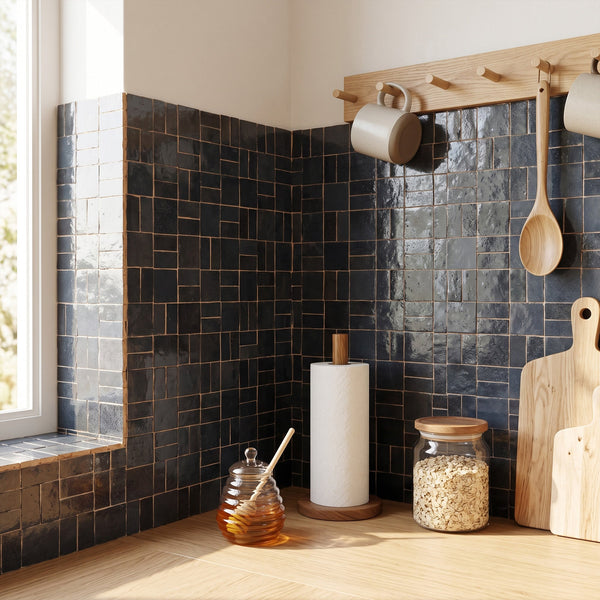
Wall and backsplash tiles are out of your line of sight and take no traffic. Nothing walks on it. It gets splashed and wiped, but it isn't ground. Light grout survives on a wall. That's why white grout on a white subway tile backsplash keeps working, and why the same pairing on a kitchen floor is a different conversation.
Floors change the math. Grout sits slightly below the plane of the tile, so every joint is a shallow recess running through the whole floor. Traffic soil settles into that recess. A mop passes over the tile surface, skimming the joint. What collects down there stays down there until someone scrubs it.
So the best grout color for floor tile is usually the one that doesn't need to look new to look right. Mid-tones and colors pulled from the tile itself absorb the ordinary darkening every floor joint goes through. That isn't a promise that they will stay clean. It's that they don't announce when they aren't.
The hard cases are entries, mudrooms, and kitchen floors: grit tracked in from outside, cooking oils, dropped food. White grout in any of those rooms is a commitment, not a design detail. It means you're prepared to scrub joints on a schedule, or to accept grout that eventually reads warm gray. If you want white grout on a kitchen floor, that's a legitimate choice. Make it knowing what it asks of you.
Shower floors sit in their own category: constant water, soap residue, and sloped joints. There, grout type matters more than grout color.
Does Joint Width Change How The Grout Color Reads?
Yes, in both directions. A wider joint puts more grout on display, so any choice becomes more prominent. Contrast gets louder, and a matched color has more surface to blend across. A narrow joint mutes contrast, sometimes until the dark grout you picked reads as a thin outline instead of a graphic line.
You don't set joint width by preference. It's governed by the tile, meaning its size, edge profile, and facial variation (how much natural color and texture differ from piece to piece), and by the manufacturer's installation instructions for that product. Rectified tile, which is mechanically trimmed to precise edges, and handmade tile with irregular edges require different joints. Check the manufacturer's instructions and the TCNA Handbook before you assume a width, then choose a color knowing how much of it you'll see.
Which Grout Type Should You Use, And Is Epoxy Worth It?
Color and type are decided together because type determines how the color holds up.
Cementitious grout, meaning cement-based, is the standard. It comes in sanded and unsanded forms, and the choice depends on joint width and on whether the tile surface is scratch-sensitive. The tile manufacturer's care and installation instructions state whether sanded grout is safe for that surface, and the grout's technical data sheet specifies the joint widths for which it's designed. Don't take a universal number for either. Cement-based grout is generally porous and requires sealing. The sealer and the schedule come from the manufacturer, not from a rule of thumb.
High-performance and single-component grouts sit between the two. What each one offers varies by product, and the technical data sheet is the only reliable comparison.
Always confirm specific joint width and compatibility requirements on the manufacturer's technical data sheet before purchasing.
Then epoxy. Manufacturers rate it as stain-resistant, and it generally doesn't require sealing, which is where it earns its cost: a kitchen floor, a shower floor, anywhere light grout meets real use.
The tradeoffs are real. It costs more, the working time is shorter once mixed, the installation is harder and punishes hesitation, and there's a risk of porous or textured handmade tile, which can haze the surface. Confirm compatibility with the tile manufacturer before you commit. And if you'd rather not learn epoxy on a large floor, the Ceramic Tile Education Foundation certifies tile installers. That's where to start looking for someone who's done it.
Why Does Grout Cure A Different Color Than The Chart?
Because cement-based grout looks darker when wet than it does cured. The color you see going in, and while you're wiping, isn't the color you'll live with. It dries lighter. A chart chip and a cured joint aren't the same thing either.
Mixing and wiping shift the result, too. Uneven water ratios between batches and inconsistent wiping leave a mottled surface. Neither is a color decision, but both look like one afterward.
So test. Not on a chart or in the showroom. Get the grout, mix a small amount, run it between two pieces of your tile, let it cure fully, and look at it in the room it's going into, under that room's own light, at the time of day you use the space. A north-facing bathroom at 7 a.m. is not a showroom at noon.
If the cured color isn't what you wanted and the tile is already set, changing grout color with a stain is worth understanding before anyone talks about tear-out.

Which Grout Color Will You Still Be Willing To Clean In Three Years?
Pick the color you know you'll maintain in the room it's going into, considering the traffic that room gets.
Work through questions in this order:
- Where is the tile?. The floor or wall determines how forgiving the color can be.
- What is the layout doing? A wall installation with a pattern you want to see can carry contrast.
- What other colors are involved? Match, contrast, or a tone pulled from the tile itself.
- What is the grout type? Cement-based, high-performance, or epoxy, chosen against the first three.
A kitchen floor with a busy tile and a first-time installer usually wants a matched mid-tone and a grout type rated for stain resistance. If you're still putting the order together, the mistakes people make when buying tile cover what else tends to get decided too late.
Order samples of your tile and get the grout colors you're deciding between in front of it, in the room, cured, in that room's light. Not sure which direction to take for your specific tile? Contact our team for live support and grout pairing advice before you order.
Frequently Asked Questions About Choosing Grout Colors
Should grout be lighter or darker than the tile?
Neither is a strict rule; it depends on the room's function and layout. Lighter grout softens the overall grid and brightens a space, while darker grout defines geometric patterns and disguises floor soil. For high-traffic floors, choosing a mid-tone or a shade slightly darker than the tile helps mask daily wear. For walls and backsplashes, lighter grout is a practical, low-maintenance option.
Does white grout stay white on floor tile?
Not without regular scrubbing and maintenance. Because floor grout joints sit slightly below the tile surface, everyday dirt and mop water settle into the recessed joints. White grout performs well on walls and backsplashes, but when used on kitchen or entry floors, it requires routine sealing, stain-resistant grout formulations (like epoxy), or consistent scrubbing to maintain its original shade.
Is epoxy grout worth the extra cost?
For high-moisture or high-traffic areas like shower floors, mudrooms, and kitchen floors, epoxy grout is often worth the investment. It is non-porous, stain-resistant, and generally does not require sealing. However, epoxy is more expensive, sets quickly during installation, and requires professional handling to prevent surface hazing on porous or handmade tiles.
How do I fix uneven grout color?
If cement-based grout cures lighter or more mottled than expected due to water ratios or wiping technique, you do not need to tear out the tile. You can apply a color-matched grout stain or colorant that absorbs into the porous joint to restore a uniform appearance while also acting as a sealer.

Find the Right Combination for Your Space
Choosing between matching or contrasting grout affects both your room's visual rhythm and its long-term cleaning schedule.
Order tile samples to view true colors side by side before installation day.