



Popular Ways to Shop


Learn more about Natural Stone Tiles
Your Guide To Natural Stone Tiles
Natural stone tile is cut directly from quarried marble, travertine, slate, limestone, quartzite, or basalt, so no two pieces look exactly alike. Unlike porcelain or ceramic tile, which is manufactured to a uniform pattern, natural stone carries the veining, color shifts, and texture of the material it came from. That authenticity is why natural stone remains a go-to choice for homeowners and designers who want a floor or wall that reads as genuinely one of a kind.
Natural Stone Floor and Wall Tile
On floors, marble tiles and limestone tiles work best in 12x12, 12x24, and 18x18 formats, laid with a honed or tumbled finish that holds up to daily foot traffic without showing every scuff. Denser stones hold their color and pattern with less variation piece to piece, while marble and limestone are more porous and need sealing at installation to resist stains.
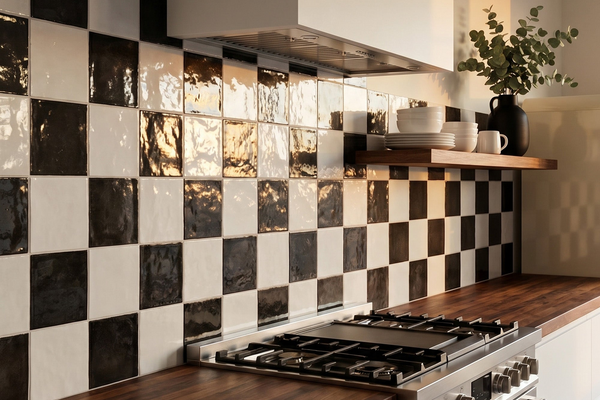
For walls and backsplashes, travertine tiles and slate tiles bring texture in mosaic, subway, and large-format sizes, often in a polished finish that catches light and makes a smaller room feel bigger. Basalt and darker slate colorways work well for a matte, moody accent wall that doesn't compete with the rest of the room.
Natural Stone Tile by Room
Bathroom. For a bathroom, choose a honed or tumbled finish over polished stone, since a matte surface feels less slippery underfoot than a glossy one. Warm travertine and soft-veined marble are popular for bathroom floors and walls, paired with a contrasting grout to define each tile.
Kitchen. In a kitchen, denser stones handle spills and heat near the stove better than softer marble, especially on a kitchen backsplash that sees daily splashes. A polished finish here reflects light across countertops and cabinetry for a brighter cook space.
Showers. Showers call for a finish that stays sure-footed when wet, so honed and tumbled stone is the more common choice for shower floors and walls over high-polish marble. Smaller mosaic formats also drain better around a shower pan than large-format tile.
Outdoor spaces. Outdoors, slate and basalt in a tumbled or flamed finish stand up to weather better than polished marble, which can etch and discolor with exposure. Use a frost-resistant, textured stone for patios and walkways where grip matters most.
How to Choose Natural Stone Tile
Match the finish to the room. Polished finishes reflect light and highlight veining, which makes them a strong pick for a formal foyer or kitchen backsplash, while honed and tumbled finishes give a softer, more slip-resistant surface for bathrooms, showers, and outdoor spaces.
Check how porous the stone is before you commit. Marble and limestone absorb more moisture and stain more easily than denser stones, so they need sealing at installation and resealing every year or two to hold up in wet areas.
Expect real veining and shade movement, not a repeating pattern. Natural stone varies piece to piece and even within the same lot, more so in slate and marble than in denser stones like quartzite. Order a couple of samples to see that range before you commit to a full room.
Plan for a wider grout joint on tumbled and irregular-edge stone. Tumbled travertine and slate often have slightly uneven edges, so a 3/16" to 1/4" grout joint hides that variation better than the tight joints used with rectified porcelain.
Confirm the stone suits indoor or outdoor use before you order. Softer, polished stones like Carrara marble are built for interior floors and walls, while frost-resistant, textured stone like basalt and slate handle exterior patios and walkways.
We carry over 1,400 natural stone tiles, from polished marble to tumbled slate, each selected for real bathrooms, kitchens, and outdoor spaces, not a warehouse shelf. Order a sample to see the veining and finish in your own space, or if you want help matching a stone to your project.


