



Popular Ways to Shop


Learn more about Marble Tiles
What Are Marble Tiles?
Marble tile is a natural stone cut from metamorphic rock, prized for the veining that forms as mineral deposits shift under heat and pressure. No two slabs read exactly alike, which is what gives a marble floor or wall its depth. Classic white stones like Carrara and Crema Marfil remain the most popular choice, though bolder colors like Empress Green are seeing a resurgence for a more saturated, statement look.
This collection also includes marble-look porcelain: tile that reproduces the same veining and tone in a manufactured, non-porous body. It costs less than quarried stone, skips sealing entirely, and holds up to more foot traffic, though it won't carry the same cool, dense feel or one-of-a-kind veining as real marble. Use the Material filter above to browse strictly genuine marble or strictly marble-look porcelain, since the two behave differently once installed.
Marble Floor and Wall Tile
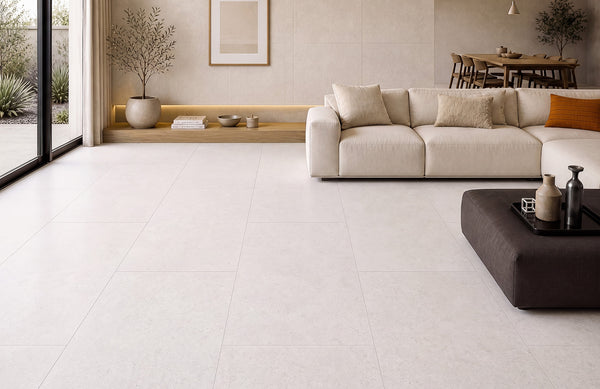
On floors, genuine marble is typically honed or polished and set in 12x12, 12x24, or 24x24 formats, with 18x18 common in larger rooms. A honed finish has a flat, matte surface that hides foot traffic and light scratching better than a polished one. Plan on a narrower grout joint (around 1/16 to 1/8 inch) for real marble, since it's calibrated more tightly than most porcelain. Marble-look porcelain runs larger, often up to 48x48, and carries a standard durability rating since it's a fired ceramic body rather than quarried stone, so it's a common swap for floor tile installations where lower maintenance matters more than authentic stone.
On walls, polished marble catches more light and reads brighter in a smaller space, which is why it shows up so often in powder rooms and shower surrounds. Marble mosaics, including basketweave, herringbone, and hexagon patterns, are mesh-backed for easier setting and work well as an accent band within a larger wall tile layout.
Marble Tile by Room
For a marble bathroom, pair a honed floor with polished wall tile to get a bit of shine without sacrificing footing near the tub. Honed marble has a more slip-resistant profile than polished, which is why it's the better call for bathroom floors specifically.
In the kitchen, marble mosaics and 3x6 subway-format pieces are the most common backsplash choice, usually paired with a quartz or butcher block counter so the marble stays a visual accent rather than a maintenance liability at the counter edge. If you want a marble-look kitchen floor without the sealing upkeep of real stone, marble-look porcelain in the same veining and tone holds up better to daily spills. Browse kitchen tile options sized for either material.
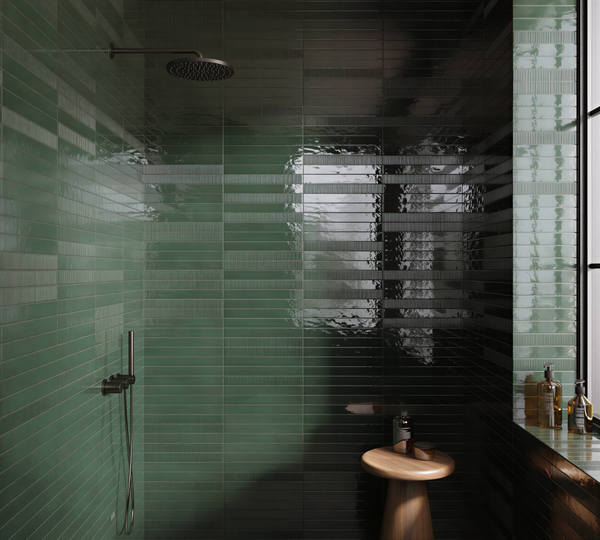
For a shower, honed genuine marble needs sealing before grouting, since constant water exposure means an unsealed surface absorbs moisture and stains faster than it would on a dry floor. If low maintenance matters more than natural stone, marble-look porcelain skips sealing entirely and holds up the same way on a shower wall or pan. See our full shower tile range in either material.
How to Choose Marble Tile
Decide between genuine marble and marble-look porcelain before you filter. Real marble costs more and needs periodic sealing, but it's a natural stone with one-of-a-kind veining. Marble-look porcelain skips sealing, holds up to more traffic, and works outdoors, where genuine marble generally doesn't. Filter this collection by Material to shop just one or the other, or browse porcelain tile for the full range beyond marble-look styles.
Pick honed finish for wet or high-traffic areas. Polished marble is more reflective, but honed holds up better to foot traffic and gives a more secure footing in bathrooms and showers.
Reseal and clean genuine marble regularly. Marble is porous, so it needs a penetrating sealer reapplied every 6 to 12 months in kitchens and bathrooms, and it can stain if acidic spills like citrus juice or wine sit on an unsealed surface. See our guide on how to clean marble tile for day-to-day care. Marble-look porcelain skips sealing and won't stain the same way.
Expect natural veining and shade movement on genuine marble, piece to piece. That's normal for quarried stone. Marble-look porcelain repeats its pattern more consistently across a run, which is worth checking on a sample if you want an even, predictable look instead.
Size up the grout joint for large-format pieces. Anything 18x18 or larger benefits from a slightly wider joint and a flat subfloor, since large tile telegraphs subfloor irregularity more visibly than a smaller format. Our large format tile collection has options in both materials if you want to go bigger.


