






Education

Quick Summary
Common ceramic tile formats include mosaics, 3x6 and other subway sizes, 4x4 squares, and larger rectangles such as 12x24. The right choice depends on the tile's approved application, the room layout, the surface flatness, and the amount of cutting required. Do not choose a floor tile by thickness alone. Check the product specifications to confirm the actual dimensions, thickness, edge type, and whether the tile is approved for your floor, wall, shower, or other intended area.
Tile size affects more than appearance. It changes the number of grout joints, the placement of cuts, the preparation required, and how easily the tile can follow a sloped or uneven surface. Thickness matters too, especially where tile meets another flooring material, fits beneath a door, or lines up with trim.
This guide explains how to compare ceramic tile sizes and thicknesses before you order. Because specifications vary by product, use the measurements and installation recommendations on the product page or technical sheet as the final reference.
Common Ceramic Tile Sizes
Ceramic tile is made in many sizes rather than one universal set of standards. The chart below shows familiar formats and common applications, but it is not a substitute for checking whether a specific product is rated for the surface you plan to tile.
| Listed size | Approx. metric size | Format | Common applications |
|---|---|---|---|
| 1x1 | 2.5 x 2.5 cm | Mosaic, usually sheet-mounted | Shower floors, niches, backsplashes, and accents when approved |
| 3x6 | 7.5 x 15 cm | Subway | Kitchen backsplashes, bathroom walls, and shower walls |
| 4x4 | 10 x 10 cm | Small square | Backsplashes, bathroom walls, feature areas, and some floors when approved |
| 6x12 | 15 x 30 cm | Rectangle | Walls and floors when approved |
| 12x12 | 30 x 30 cm | Square | Bathroom, kitchen, hallway, and other residential floors when approved |
| 12x24 | 30 x 60 cm | Large rectangle | Floors and walls when approved |
| 18x18 | 45 x 45 cm | Large square | Residential and light-commercial floors when approved |
| 24x24 and larger | 60 x 60 cm and larger | Large format | Open floors, shower walls, and feature walls when approved |
Important: A size may be available in ceramic, porcelain, glass, or natural stone. Confirm the material and approved applications for the exact product rather than relying on size alone.

Nominal Size vs. Actual Size
The size used in a product name may be nominal or rounded. A tile listed as 12x24 inches can measure slightly less, and the exact measurement may vary by manufacturer and production lot. Those small differences matter when you are planning grout joints, calculating repeated patterns, or aligning tile with cabinets, niches, outlets, and adjacent surfaces.
Rectified tile is mechanically finished after firing to create more precise edges and more consistent dimensions. It can support a cleaner, narrower grout joint when the manufacturer permits it, but rectified does not mean grout-free. The installation still needs an appropriate joint to accommodate tile variation and site conditions.
Before ordering, confirm:
- The actual tile dimensions
- The thickness
- Whether the edges are pressed or rectified
- The manufacturer's minimum grout-joint recommendation
- Whether trim pieces are available and how their dimensions compare
How Thick Is Ceramic Tile?
Ceramic tile thickness varies by product, size, construction, and intended application. Many products fall within a range of roughly 1/4 to 1/2 inch, but there are thinner and thicker exceptions. Always use the listed specification for the tile you are considering.
Thickness by itself does not tell you whether tile belongs on a floor. A thinner tile may be manufactured and tested for a floor application, while a thicker decorative wall tile may not be approved for foot traffic. Check the product's approved-use information, relevant performance ratings, and installation instructions.
| What to check | Why it matters |
|---|---|
| Tile thickness | Affects finished height, trim selection, transitions, and some cuts |
| Approved applications | Confirms whether the product is intended for walls, floors, showers, or other areas |
| Surface and traffic rating | Helps determine whether a floor tile suits the expected use |
| Wet-area suitability | Confirms whether the tile is appropriate for a shower wall, shower floor, or other wet location |

How Thick Is a Finished Tile Floor?
The finished height includes more than the tile. It can include mortar, a waterproofing or uncoupling membrane, backer board, a mortar bed, and other components required for the substrate. Mortar thickness also depends on the tile format, trowel, substrate flatness, and installation system.
For an accurate transition plan, have the installer calculate the complete assembly before installation. This is especially important near:
- Hardwood, vinyl, carpet, or another tile floor
- Exterior and interior doors
- Dishwashers, ranges, and built-in cabinetry
- Floor vents and thresholds
Do not assume the mortar can be made thinner or thicker to correct a height problem. The selected installation products must be used within their manufacturer's requirements.
Large Tile vs. Small Tile
Both large and small tiles can work in compact or spacious rooms. Room size is not a strict rule. The better choice depends on the layout, the desired grout pattern, and how the cuts will fall.
Large-format tile
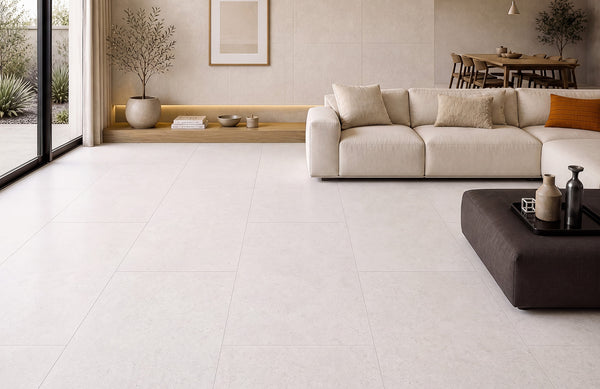
Large-format tile creates fewer grout joints and a quieter visual field. It can work well on open floors and feature walls, but it places greater demands on substrate flatness, mortar coverage, handling, and layout. A professional installer should inspect and prepare the surface before setting the tile.
Small tile and mosaics
Small formats introduce more grout joints and make it easier to follow curves, niches, and multi-directional shower-floor slopes. They also require more grout maintenance. On a shower floor, confirm that the exact mosaic is approved for the application and review its wet-area performance rather than assuming that any small tile is suitable.

How Shape and Layout Change the Installation
Square and rectangular tiles support straightforward stacked and offset layouts. Subway tile can also be arranged vertically, in herringbone, or in other patterns. Hexagons, pickets, arabesques, and other shaped tiles add detail but may require more perimeter cuts and careful alignment.
For rectangular tile, review the manufacturer's recommended maximum offset. Many longer tiles should not be installed at a 50% offset because natural warpage can place the high point of one tile next to the low point of another, making lippage more noticeable. A 33% offset is a common recommendation, but the product instructions and the tile's actual flatness should guide the final layout.
Pattern also affects the amount of tile needed. Diagonal, herringbone, and highly centered layouts usually create more cuts than a simple stacked pattern. Ask the installer to confirm the layout and waste allowance before ordering.

Choosing Tile Size by Room
Kitchen backsplashes
Start with the dimensions between the countertop and upper cabinets, then account for outlets, corners, and the area behind the range. A smaller format can reduce awkward cuts in a short backsplash, while a longer tile can create a more linear look. Make sure the layout is centered around the most visible focal point.
Bathroom and shower walls
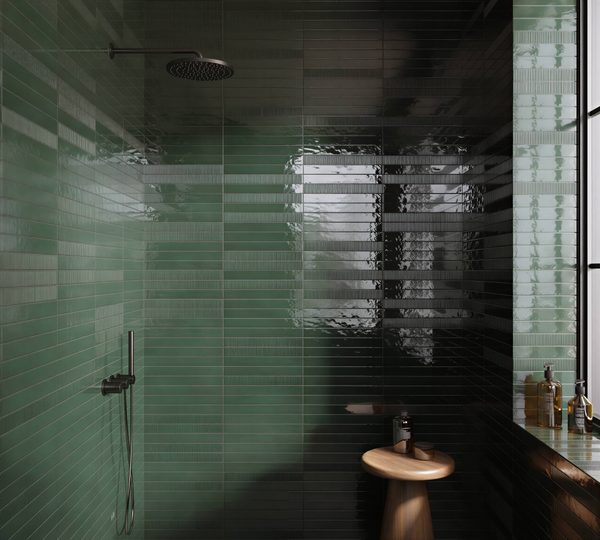
Check how the tile will meet the tub, ceiling, niche, valve, and outside edge. Large tile reduces grout joints but requires a flatter wall. Smaller tile can simplify cuts around plumbing and detailed areas. Any tile used inside a shower must be approved for that location and installed as part of a properly waterproofed assembly.
Shower floors
Shower floors must slope to the drain. Mosaics are commonly used because their smaller pieces can follow a traditional multi-plane slope. Larger tile may be possible with a compatible drain and slope design, but it requires careful planning. Confirm shower-floor approval and applicable slip-resistance information for the exact product.
Main floors and open rooms
A larger format can reduce the number of grout joints, but it does not eliminate the need for grout or movement accommodation. Before choosing, map the tile across connected spaces and check the cuts at doorways, walls, cabinets, and transitions.
What to Check Before You Order
-
Confirm the application. Make sure the exact tile is approved for the intended wall, floor, shower, or commercial setting. -
Check actual dimensions and thickness. Use them to plan grout joints, trim, transitions, and finished height. -
Review the layout. Identify focal points and avoid narrow, highly visible cuts where possible. -
Confirm the recommended grout joint and offset. Follow the product and installation-material instructions. -
Calculate waste with the installer. Include cuts, breakage, pattern complexity, and extra material for future repairs. -
Order the project quantity together. Tile can vary between production lots, so verify shade and caliber information before installation and keep the lot labels. -
Inspect the tile before installation. Dry-lay pieces from several boxes to review color, variation, size, and the planned arrangement.

Frequently Asked Questions
What is the most common ceramic tile size?
There is no single most common size for every application. A 3x6 is a familiar wall and backsplash format, while 12x12 and 12x24 are widely recognized floor and wall sizes. Availability and approved use vary by collection.
What is the 1/3 offset rule for tile?
The 1/3 rule means shifting each row by no more than one-third of the tile length instead of using a half offset. It is often recommended for longer rectangular tile to reduce noticeable lippage caused by tile warpage. Check the manufacturer's instructions because the permitted offset can vary by product.
Is 12x24 tile considered large format?
Yes. In common industry usage, tile with at least one edge longer than 15 inches is treated as large format. A 12x24 tile therefore requires the flatter substrate and installation methods specified for large-format tile.
How thick is 12x24 ceramic tile?
There is no universal thickness for 12x24 ceramic tile. Check the individual product specification before planning transitions, trim, or finished floor height.
Are all ceramic tiles the same thickness?
No. Thickness varies by manufacturer, collection, format, and construction. Even tiles with the same listed length and width can have different thicknesses.
Can large tile be used in a small bathroom?
Yes. Large tile can reduce the number of grout joints in a small bathroom, but the room may require more cuts around fixtures and walls. Test the layout using the tile's actual dimensions before ordering.
Does thicker tile mean it is more durable?
Not necessarily. Thickness is only one product characteristic. Use the manufacturer's application guidance and relevant performance information to determine whether a tile is suitable for the expected traffic, surface, and environment.
Shop Ceramic Tile by Format
Explore ceramic tile, subway tile, hexagon mosaic tile, and large-format tile. Compare samples in your room, review the product specifications, and consult a qualified installer before finalizing the size and quantity for your project.