

Education

Quick Summary
The main wall tile materials are ceramic, porcelain, glass, natural stone, cement, and metal. Mosaic is commonly treated as a seventh type, but it describes a small-format design that can be made from several of those materials. For most projects, the best choice is the exact product approved for the wall location, expected moisture, cleaning routine, and installation system.
Wall tile can protect a surface from splashes while adding color, texture, and pattern. However, two tiles that look similar can require very different installation methods and maintenance. A glazed ceramic backsplash, a marble shower wall, and a metallic feature tile should not be selected or cared for in the same way.
This guide compares seven common wall tile categories, explains where each is often used, and identifies the product details to confirm before ordering. Always use the specifications for the exact tile as the final guide because approved applications vary within every material category.

Wall Tile Types Compared
| Type | Common wall applications | Customer advantage | What to confirm |
|---|---|---|---|
| Ceramic | Backsplashes, bathroom walls, decorative walls | Broad selection of colors, sizes, textures, and price points | Glaze, wet-area approval, and whether it is wall-only or floor-rated |
| Porcelain | Shower walls, tub surrounds, backsplashes, large-format walls | Low water absorption and many stone, concrete, and wood looks | Wall support, mortar, cutting requirements, and wet-area approval |
| Glass | Backsplashes, niches, borders, accent walls | Reflective color and a bright surface | Compatible mortar, cutting method, backing, and wet-area approval |
| Natural stone | Feature walls, fireplace surrounds, backsplashes, bathroom walls | Natural veining, mineral variation, and texture | Stone-specific care, sealing recommendation, variation, and application |
| Cement | Decorative backsplashes, inset panels, and feature walls | Graphic patterns and handcrafted character | Sealing, grout-release procedures, cleaning restrictions, and thickness |
| Metal or metallic-look | Accent strips, niches, range backsplashes, and feature walls | Reflective finish and visual contrast | Actual body material, scratch sensitivity, cleaners, and heat-location approval |
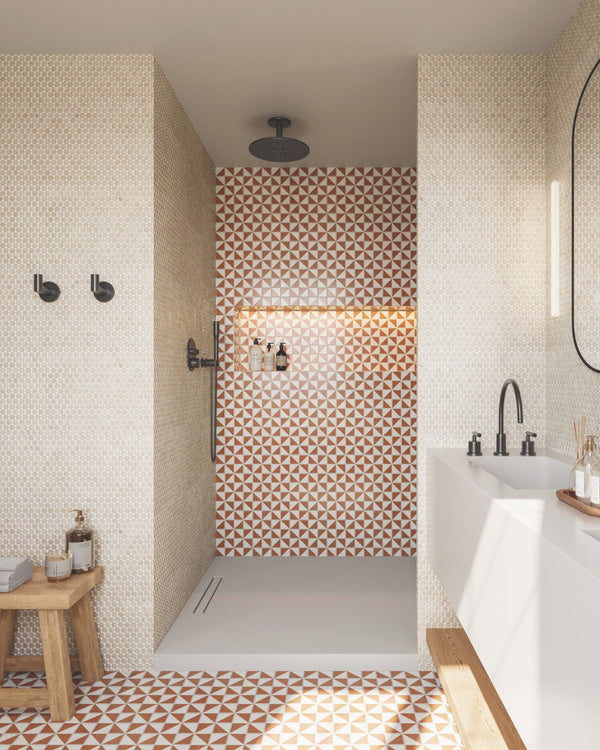
| Mosaic | Backsplashes, niches, borders, curved walls, and shower accents | Small-scale patterns and detailed shapes | Base material, mounting method, sheet alignment, grout, and application approval |
Important: A tile material does not determine the entire installation. Grout joints, mortar, waterproofing, substrate preparation, movement accommodation, trim, and installer skill all affect the finished wall.
Ceramic Wall Tile
Ceramic tile offers one of the widest selections of colors, shapes, surface textures, and decorative glazes. In retail use, “ceramic” often refers to non-porcelain ceramic tile, although porcelain is technically part of the broader ceramic tile family.
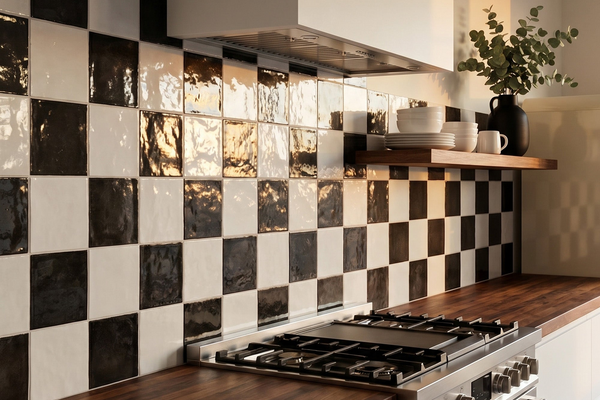
Glazed ceramic is a practical option for many kitchen backsplashes, vanity walls, powder rooms, and bathroom walls because the fired glaze creates a cleanable surface. Some ceramic products are intended only for walls, while others are approved for floors as well. Do not assume every ceramic tile is softer, thinner, or wall-only. Check the individual product's application information.

Choose ceramic wall tile when:
- You want a broad selection of subway, square, patterned, or dimensional formats.
- The tile is approved for the intended wall and moisture exposure.
- You prefer a glazed surface that can be maintained according to the manufacturer's instructions.

Porcelain Wall Tile
Porcelain tile is defined by low water absorption of 0.5% or less. It is available in small decorative formats, large rectangles, mosaics, and panels that can recreate the appearance of marble, concrete, wood, and other materials.
Low absorption makes porcelain a strong candidate for many shower walls and tub surrounds, but it does not make the installation waterproof by itself. A shower still requires an appropriate substrate or waterproofing membrane, compatible setting materials, proper coverage, and correctly treated transitions. Confirm that the exact porcelain product is approved for the wet location.
Porcelain can also be heavier and more demanding to cut than some wall tile, particularly in large formats. Give the installer the product specifications early so wall preparation, handling, mortar, layout, and edge finishing can be planned correctly.

Glass Wall Tile
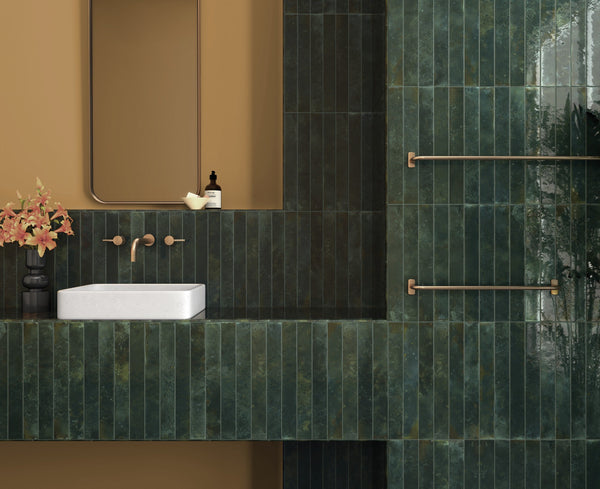
Glass tile brings color, shine, and reflection to backsplashes, niches, borders, and feature walls. Transparent, translucent, frosted, and backed glass products can look different after installation, so a sample should be viewed against the intended wall and under the room's lighting.
Installation requirements vary. The color and coverage of the setting material can affect the appearance of translucent glass, and cutting may require glass-specific tools and techniques. Some glass tile is approved for shower walls, while other products have narrower applications. Review the manufacturer's instructions for the exact product rather than treating all glass tile as interchangeable.
Glass can also show water spots, fingerprints, and surface residue more readily than a matte tile. Consider the cleaning routine when choosing it for a full wall instead of a smaller accent.

Natural Stone Wall Tile
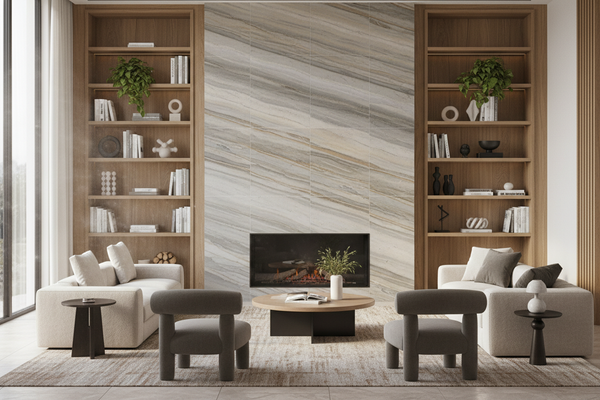
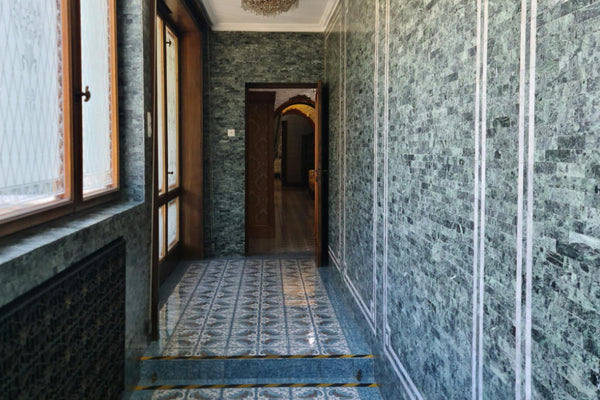
Natural stone tile includes marble, limestone, travertine, slate, quartzite, and other quarried materials. Each piece can vary in veining, mineral deposits, shade, texture, and surface finish. That natural variation is part of the material rather than a printing defect.
Care requirements vary by stone. Acidic cleaners can etch calcite-based materials such as marble and limestone, and some stones may benefit from an appropriate penetrating sealer. Sealing is not a universal schedule or a guarantee against staining, so follow the supplier's recommendations for the exact stone and finish.
Before ordering natural stone:
- Review multiple samples or current-lot images to understand the expected variation.
- Confirm whether the stone is approved for the intended wet, heat-exposed, or exterior location.
- Ask what cleaner, grout, mortar, and sealer are recommended.
- Have the installer plan the arrangement before setting tile from different boxes.
Cement Wall Tile
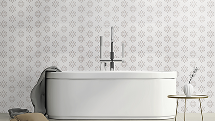
Patterned cement tile is often marketed as encaustic cement tile. It is generally made by pressing pigmented cement layers into a mold and curing the tile rather than firing it like ceramic. This creates a substantial tile with color and pattern within the surface layer.
Cement tile is valued for graphic patterns, soft color variation, and handcrafted character. It is also porous and can be sensitive to staining or harsh cleaners. Many products require sealing and specific treatment before or during grouting, but the correct process depends on the manufacturer.
Check thickness, weight, edge variation, sealing instructions, grout compatibility, and maintenance requirements before selecting cement tile for a backsplash or feature wall. If the product is only an encaustic-look tile, follow the care instructions for its actual body material rather than for cement.

Metal and Metallic-Look Wall Tile
This category can include solid metal pieces, metal-faced tile, and ceramic or porcelain tile with a metallic appearance. Identifying the actual construction matters because each type can have different cutting, cleaning, scratch-resistance, and installation requirements.
Metallic tile works well when you want a reflective accent, darker contrast, or an industrial influence. It can be used in niches, accent bands, range backsplashes, or feature walls when the product is approved for that location.
Do not assume that a metallic appearance means the tile is solid metal or suitable next to direct heat. Check the product material, finish, cleaning restrictions, and application guidance. Abrasive cleaners may scratch or change some metallic surfaces.

Mosaic Wall Tile
Mosaic tile is a size and format category rather than a single material. Mosaic pieces can be ceramic, porcelain, glass, stone, metal, or a combination. They are commonly supplied on mesh, paper, or another mounting system to help position multiple pieces together.
Small pieces can create detailed patterns and may adapt to some curves, niches, and irregular areas more easily than large tile. However, suitability depends on the piece size, sheet flexibility, backing, adhesive coverage, and the radius of the surface. Sheet seams can become visible if spacing is not checked during installation.
Mosaics also create more grout joints than large tile. That can be an intentional part of the design, but it increases the importance of grout selection, installation quality, and maintenance. For shower floors or submerged areas, confirm that the exact mosaic, mounting material, and installation system are approved for the application.

Wall Tile Formats and Styles
Material is only part of the choice. Format changes the number of grout joints, the placement of cuts, the required wall flatness, and how the pattern relates to cabinets, fixtures, niches, and corners.
-
Subway tile: Rectangular subway tile can be installed in stacked, offset, vertical, herringbone, and other layouts. Actual dimensions and manufacturer offset recommendations should guide the pattern. -
Large-format tile: Tile with at least one edge longer than 15 inches is generally treated as large format. Fewer grout joints create a quieter surface, but the wall requires tighter flatness tolerances and appropriate handling and setting methods. -
Panels and slabs: Very large, thin products can cover broad areas with fewer joints. They require specialized planning, equipment, transportation, cutting, and qualified installation. -
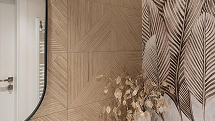
Dimensional and fluted tile: Raised, ribbed, sculpted, and 3D textured tile responds to directional light. Confirm cleaning expectations and how exposed edges and corners will be finished. -
Handmade and handmade-look tile: Irregular edges, surface texture, glaze pooling, and shade variation create movement. Review several pieces together and use the recommended grout joint.
How to Choose Wall Tile by Application
Kitchen backsplash
Glazed ceramic, porcelain, glass, stone, cement, metal, and mosaics can all appear on a backsplash when approved. Compare ease of cleaning, sensitivity to cooking residue, sealing requirements, cuts around outlets, and how the tile finishes at exposed edges.
Shower and tub walls
Select tile specifically approved for the wet location. Porcelain, ceramic, glass, stone, and mosaics may all be options depending on the product. The tile surface is only one part of the shower. The assembly also requires proper waterproofing, mortar coverage, joints, slopes on horizontal surfaces, and installation details.
Bathroom walls outside the shower
Bathroom tile outside direct water exposure offers greater flexibility. Decide whether the wall needs an easy-clean background, a full-height color treatment, or a smaller feature behind the vanity.
Fireplace surround
Natural stone, porcelain, ceramic, cement, metallic-look, and dimensional tile can create a fireplace focal point. Confirm the exact product, setting materials, substrate, clearances, and location are appropriate for the expected heat exposure and fireplace type.
Feature wall
A feature wall is a good location for patterned, fluted, metallic, stone, or mosaic tile because the material can be viewed without competing with every surface in the room. Consider lighting, furniture placement, exposed edges, and whether texture will make cleaning more involved.
What to Confirm Before Ordering Wall Tile
-
Approved application: Verify that the exact tile is intended for the wall, moisture level, interior or exterior setting, and expected heat exposure. -
Actual dimensions and thickness: Use product specifications to plan grout joints, trim, outlets, niches, and adjoining surfaces. -
Weight and format: Large or heavy tile may require additional wall, mortar, handling, and installation planning. -
Surface variation: Review the stated shade variation and several samples or pieces when possible. -
Care requirements: Confirm approved cleaners, sealing guidance, and sensitivity to acids, abrasives, water spots, or scratches. -
Edge treatment: Decide whether the installation will use matching trim, bullnose, pencil, a profile, a miter, or another approved finish. -
Quantity and lot: Have the installer calculate cuts, breakage, layout waste, and material for future repairs. Order the project quantity together when possible. -
Installation instructions: Share the tile and setting-material specifications with the installer before work begins.
Once the list is narrowed to two or three options, order samples. View each sample against the countertop, cabinetry, fixtures, paint, or flooring it will meet. Check it during the day and at night because glaze, reflectivity, texture, and color can shift under different lighting.

Frequently Asked Questions
What are the main types of wall tile?
The six primary material groups covered here are ceramic, porcelain, glass, natural stone, cement, and metal or metallic-look tile. Mosaic is often listed as a seventh type, although it describes a small-format tile that can be made from several materials.
What is the best tile for a wall?
There is no single best wall tile for every project. Glazed ceramic offers broad design choice for many backsplashes and bathroom walls. Porcelain provides low water absorption and many large-format options. Glass adds reflection, while stone, cement, metallic, dimensional, and mosaic tile offer distinctive surfaces with different care requirements.
What is the difference between ceramic and porcelain tile?
Porcelain is a type of ceramic tile that meets a water-absorption threshold of 0.5% or less. Non-porcelain ceramic and porcelain can both be suitable for walls. Choose between them using the exact product's approved applications, format, appearance, installation requirements, and price rather than assuming porcelain is always necessary.
Can floor tile be installed on a wall?
Sometimes, but approval depends on the tile, wall assembly, weight, size, mortar, substrate, and installation method. A product being floor-rated does not automatically mean every wall can support it. Confirm the plan with the tile and setting-material manufacturers and a qualified installer.
Can wall tile be installed in a shower?
Only when the exact product is approved for the intended shower location. The shower also needs a correctly designed waterproofing system and compatible installation materials. A low-absorption tile does not waterproof the wall behind it.
Does wall tile need to be sealed?
It depends on the tile, grout, application, and manufacturer. Many glazed ceramic, porcelain, and glass surfaces do not require a penetrating sealer. Some natural stone, cement tile, unglazed surfaces, and cement-based grout may benefit from or require sealing. Follow product-specific instructions because sealing needs and schedules vary.
What wall tile styles are popular now?
Current wall tile design includes large-scale surfaces with fewer joints, fluted and dimensional relief, handmade and handmade-look glaze variation, mixed matte and glossy finishes, warm neutrals, earthy greens, and patterned accent areas. Choose a direction that works with the room and material rather than relying on trend alone.
Explore wall tiles, kitchen tiles, shower tiles, and backsplash tiles. Compare samples, review the product specifications, and consult your installer before ordering the full project quantity.