


Popular Ways to Shop


Learn more about Kitchen Tiles
What Are Kitchen Tiles?
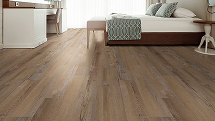
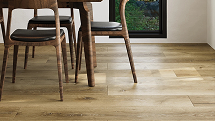
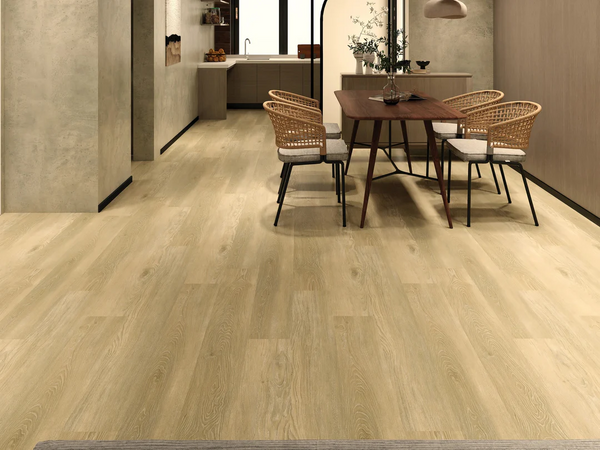
Kitchen tile is any wall or floor tile installed in a kitchen, most commonly porcelain, ceramic, or natural stone chosen for how well it resists grease, water, and daily foot traffic. It does three jobs in one room: it protects the wall behind the stove and sink, it covers the floor underfoot, and increasingly it dresses an island face or open shelving as an accent. Kitchen tile differs from bathroom tile in what it's optimized for. A bathroom floor is chosen mainly for slip resistance in a wet room, while a kitchen floor and backsplash are chosen first for how easily they wipe clean and how they hold up near heat. We carry in wood-look and stone-look finishes alongside natural styles built for exactly this kind of daily use.
Kitchen Floor and Wall Tile
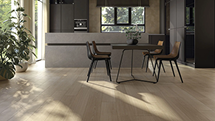
Porcelain is the default choice for kitchen floor tile because it resists water absorption and holds up to constant walking and dropped pans. Large format tile, typically 24x24 inches or bigger, reduces the number of grout lines across an open floor and reads as one continuous surface. Check our options if that's the look you want. Look for a PEI rating of 3 or higher on any kitchen floor tile, since that rating reflects how well the glaze holds up to foot traffic, and pair it with a grout joint of 1/8 inch or narrower for the cleanest line. Browse the full range if you want to compare beyond kitchen-specific picks.
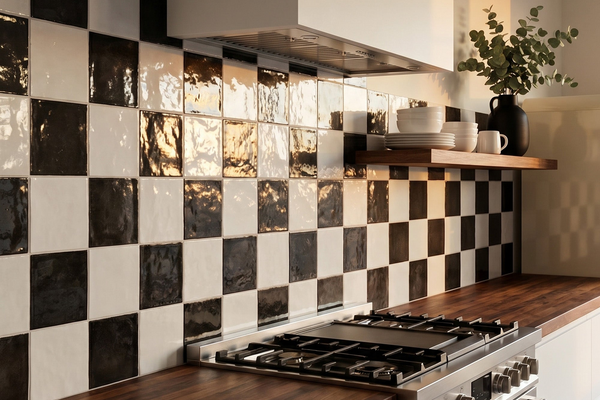
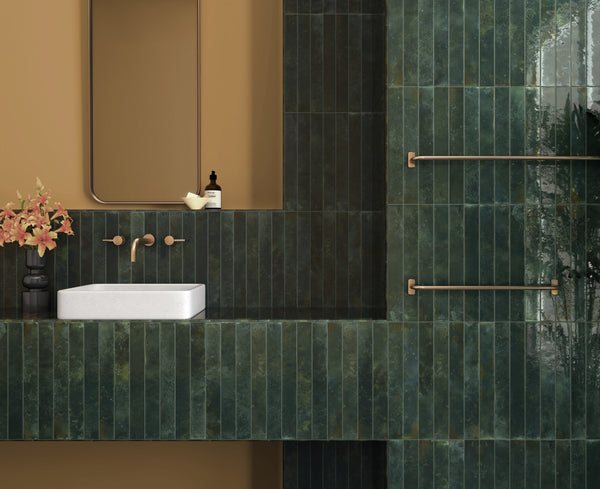
Kitchen wall tile does its heaviest work as the backsplash, and that's where kitchens do the most design work. Subway tile in the classic 3x6 size is still the most requested kitchen backsplash tile shape because it works with almost any cabinet color, though hexagon and penny round mosaics are close behind for a more textured look. A glossy finish on the backsplash reflects light and wipes clean in one pass, which matters directly behind a stove or sink. Our and collections cover both, and the wider range works well for a full accent wall behind open shelving or a coffee bar.
Kitchen Tile by Style
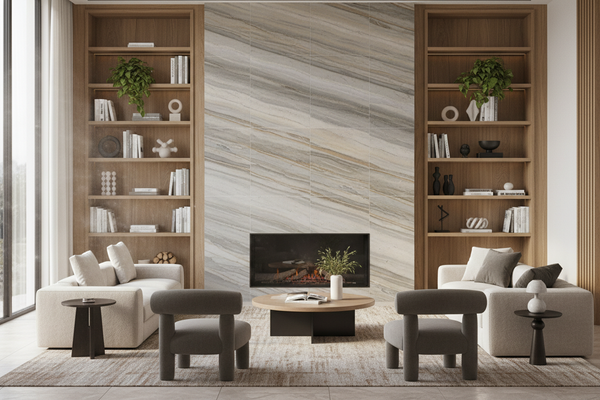
Modern and minimalist kitchens pair large format porcelain floors with a slab-look backsplash in the same tone, keeping grout lines to a minimum so the surface reads as one clean plane. White kitchen tiles are the most requested base for this look, especially in a matte or honed finish, since it hides fingerprints and daily smudges better than a high-gloss surface.
Farmhouse and traditional kitchens almost always start with a subway tile backsplash, often in a herringbone or classic running-bond layout, paired with a warm stone-look or wood-look floor. A backsplash adds pattern without straying from the style's simple palette.
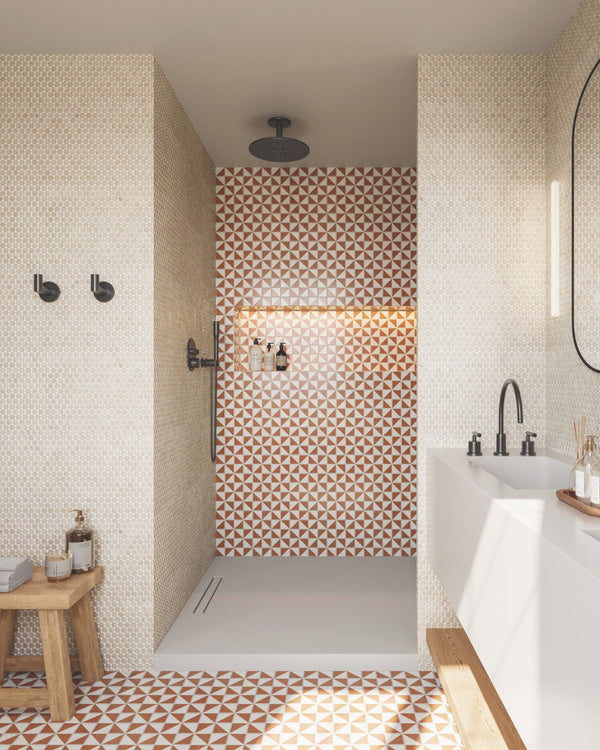
Bold and patterned kitchens use tile as the room's focal point instead of a background surface. A floor or an encaustic-look patterned backsplash gives a small kitchen personality that paint alone can't, and it's worth building the rest of the room's palette around that one statement surface.
How to Choose Kitchen Tile
Match the finish to how you cook. A glossy backsplash wipes clean in one swipe and works well directly behind a stove, but it also shows fingerprints and water spots more than a matte surface does. If you cook often and want a lower-maintenance look, choose a matte or textured finish for the backsplash and save glossy for an accent strip.
Pick a grout joint width for the look you want. A narrow 1/16 to 1/8 inch joint reads modern and minimizes visible grout lines, but it requires a flatter subfloor and tile with rectified edges, meaning the edges are cut perfectly square after firing. A wider 3/16 to 1/4 inch joint suits subway tile and traditional layouts and forgives more variation in the tile itself.
Choose a PEI rating built for foot traffic on the floor. PEI measures how well a glaze resists surface wear, and a kitchen floor should use PEI 3 or higher since it sees daily walking, dropped utensils, and chair movement. The backsplash isn't exposed to that kind of wear, so PEI matters far less once tile is on the wall.
Weigh texture separately for the floor and the backsplash. A kitchen floor benefits from a bit of texture underfoot, since it deals with water, oil, and flour spills that a bathroom floor doesn't see as often. Save fully polished, glass-smooth finishes for the backsplash and other vertical surfaces where they won't be walked on.
Order a sample before you commit to a grout color. Photos show you the overall look, color direction, and pattern at a glance, while a physical sample lets you check that exact color and finish under your own kitchen lighting, next to your actual cabinets and countertop. Use both together before you order the full run.


